An Azerbaijani wedding in Italy: traditions, venues and paperwork
An Azerbaijani wedding in Italy goes well when the venue understands what a toy is: a big guest list, live music, hours of dancing and families at the centre of everything. Here is how the traditions fit, what to ask venues, and how the legal side works.
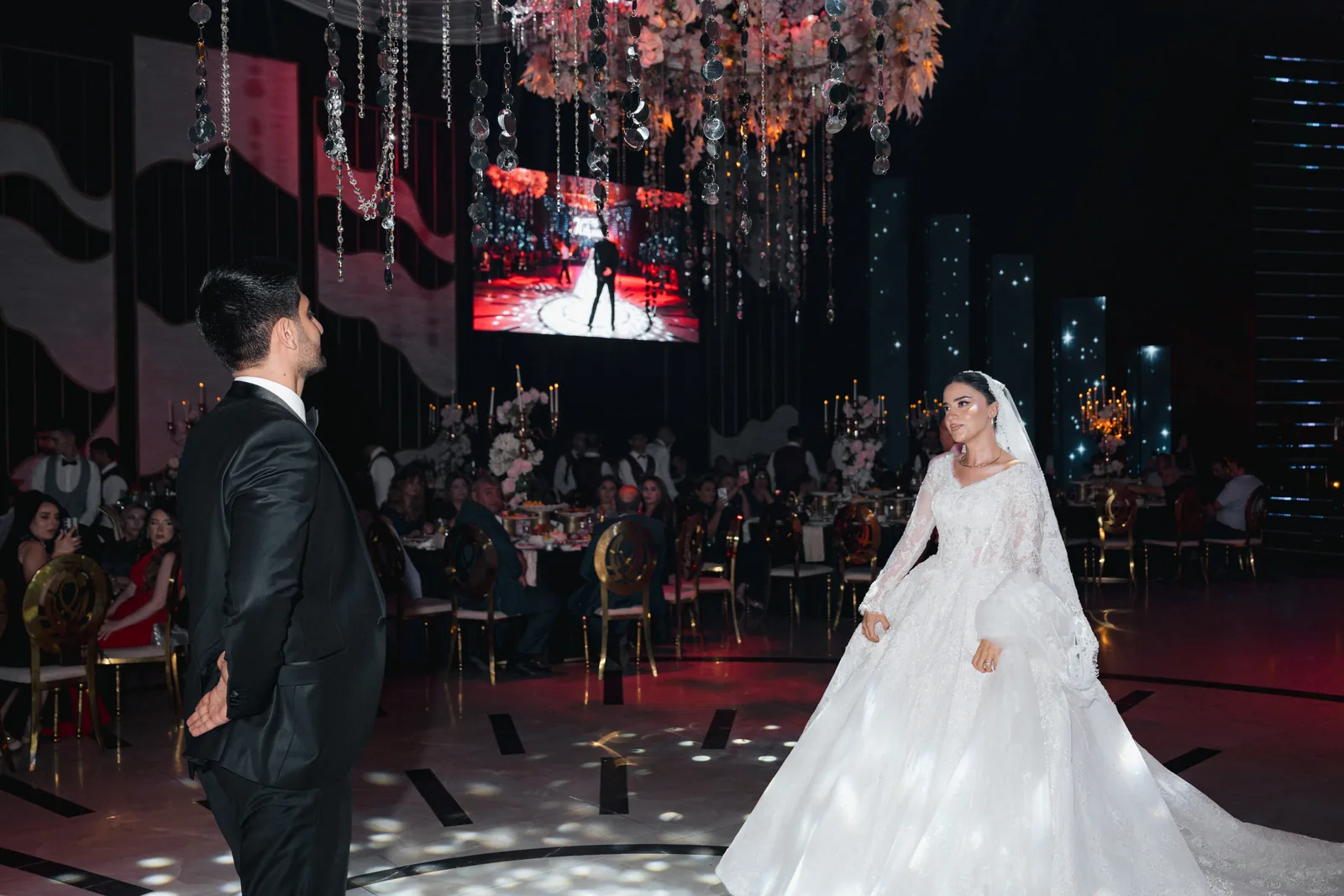
An Azerbaijani wedding in Italy is a toy that has travelled: the same music, the same families and the same long night of dancing, with Italian light, food and architecture around it. I am a wedding photographer and filmmaker based in Turin, and I speak Azerbaijani, Russian and Turkish as well as English and Italian. I have photographed weddings in Baku and in Piedmont, and this is what I would tell you over tea before you sign with a venue.
Traditions differ between regions, between Baku and the villages, and from one family to the next. What follows is a general picture drawn from ethnographic sources. Your elders will know your family's way, and that is the version that matters.
Why Azerbaijani families choose Italy
For families spread between Baku and cities across Europe, Italy is a meeting point that most relatives can reach. One Schengen visa covers the trip, and guests can add a few days in Rome, Florence or on Lake Como around the wedding.
Then there is the setting: royal residences, castles in the Alpine foothills and villas with long gardens, plus kitchens that handle a long, generous menu without fuss. In June the evening light in Turin lasts past 9 pm. A toy needs space, music and good food, and Italy has all three.
How the traditions fit an Italian wedding
Elçilik, söz and nişan
The path to a wedding usually begins with elçilik: respected elder relatives of the groom visit the bride's family to ask for her hand. Ethnographers note that this visit remains expected even when the couple have already chosen each other. When the answer is yes, the bride's family serves sweet tea, a sign of a sweet life ahead and of two families becoming one. The family's agreement, söz kəsmək, opens the way to the nişan, the engagement, when the groom's side brings trays called xonça, dressed with red ribbons and filled with sweets, gifts and the ring.
These steps normally happen at home, months before the wedding. If your nişan is in Baku and the wedding is in Italy, I can photograph both.
Xınayaxdı, the henna night
The xınayaxdı is the henna evening, traditionally held at the bride's family home before the main celebration. The groom's closest relatives put henna on the bride's fingers and give gifts while songs are sung around her; in many families the mother-in-law presents gold in front of everyone. It has different names in different regions: sources mention Shaki, Tovuz, Masally, Lankaran, Guba and Absheron, each with its own word for it.
In Italy the henna night fits naturally the evening before, in a villa salon, a hotel function room or a private dining room. Tell the venue it is a private family evening with music, so they plan the space and the noise accordingly.
The day itself: toy music and dancing
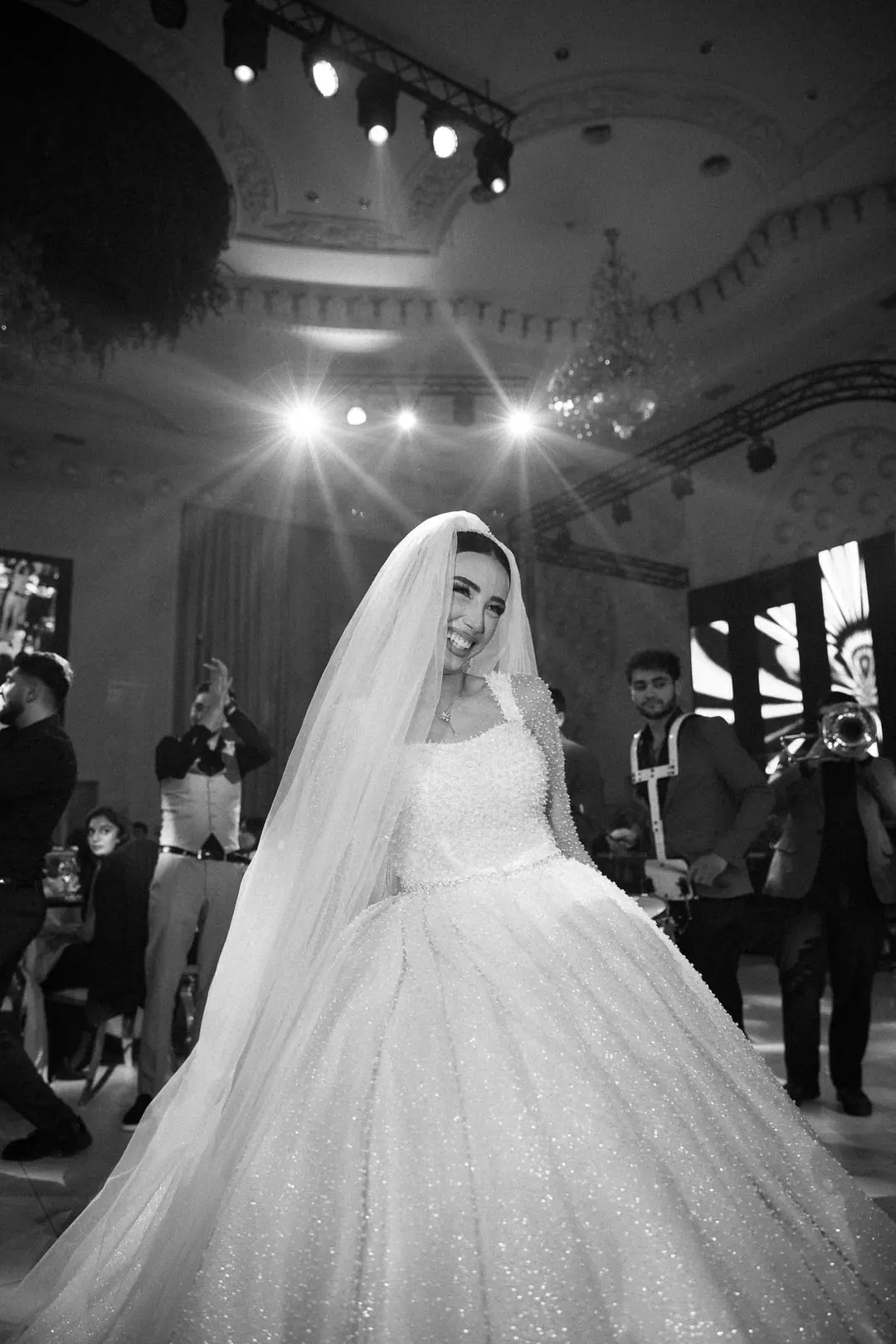
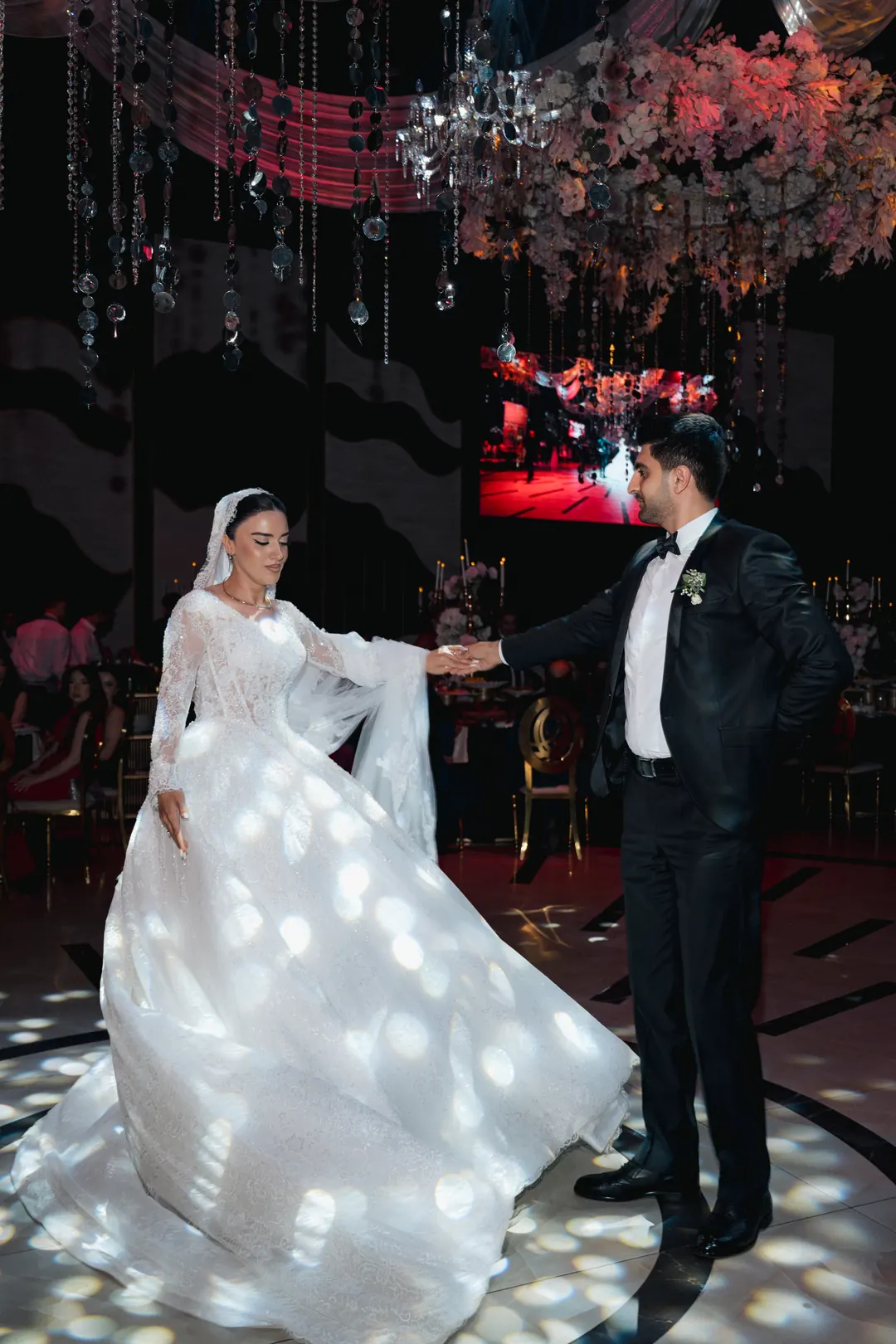
Modern Azerbaijani weddings usually take place on a single day, often in a wedding hall, with a white dress and a photographer, all changes ethnographers have recorded since the 1990s. The evening is led by singers and musicians, often with a tamada who manages the toasts and the order of the night. Families have favourite melodies: Vağzalı, known as the bride's melody, plus dance tunes such as Yallı, Uzun dərə, Heyva gülü and Tərəkəmə.
For your venue this means space and power for a band, a dance floor in the middle of the room rather than to one side, and a timeline that gives the dancing most of the night. Italian receptions are built around long dinners; a toy is built around the floor. Say so early.
The bride's departure and the red ribbon
The most emotional moment for many families is gəlin köçürmə, when the bride leaves her parents' home. Sources describe a sequence that varies by region: the door to the bride's room held shut until the groom's side gives a gift, the parents' blessing, Vağzalı playing as she walks out, a mirror carried in front of her (the bəxt güzgüsü, the mirror of fortune) and a lit candle or lamp beside her, for protection and good fortune.
Before she leaves, a red ribbon or sash is tied around her waist. Who ties it varies: several accounts describe the groom's brother doing it, sometimes tying and untying it twice before the third knot holds, while an older custom gave the belt to the bride's father. Some families also tie money into the bride's hand. Tell me in advance who will tie the ribbon and where, because it lasts seconds and the light in a hotel corridor is rarely kind.
In Italy the "home" is usually the bride's hotel suite or a room in the villa, and it works well: the family gathers, the music plays, and the walk to the car becomes a walk down a staircase or across a courtyard.
Dancing, şabaş and money customs
Şabaş is the custom of throwing banknotes over the heads of people dancing, scattering them at their feet or giving them to the musicians. Whether the money goes to the band or to the hosts is agreed before the wedding, and the money on the floor is collected during or after each dance. Guests also give money as gifts, and when the bride and groom dance, the şabaş reaches its peak.
At an Italian venue, agree in advance that cash on the dance floor is fine, who collects it and where it is kept safe, and tell the band leader. On camera, şabaş is all movement, and the faces around the dancers tell the story.
Families and elders
At a toy the families are hosts, not guests. Elders give the blessings, decide who speaks and who dances first, and expect to be greeted properly. Plan time for formal family photographs early in the evening, while everyone is fresh, and give me one person from each side who knows every aunt and cousin by name.
Planning an Azerbaijani wedding in Italy
Venues for a big guest list and a long night
Many Italian venues are designed for a smaller guest list and a long seated dinner. For a toy, ask each venue these questions in writing:
- the maximum seated guest count indoors, and the plan if it rains
- the time the music must stop, and whether that applies to indoor music too
- whether a live band with drums and amplification is allowed
- whether outside caterers or your own cooks are permitted
- whether the dance floor can sit in the centre of the room
Music curfews are common, especially at villas near homes, and depend on local rules and the venue's own licence. Get the exact finishing time in the contract.
Food, halal options and the table
An Azerbaijani table means plov, dolma, kebabs, sweets and a lot of tea. Ask caterers whether they can source halal meat; many can, and some will work with your family's own cooks for one or two dishes. Ask who certifies the meat, how the kitchen keeps it separate, and how they serve tea through the night. If some guests prefer an alcohol-free table, say so early; it changes the bar plan and the timeline.
Italian bands play beautifully, but few know the toy repertoire. Many families pair Italian musicians for the aperitivo with a singer, band or DJ who knows Azerbaijani music for the evening. Check the venue's stage size, power and sound limits before you book them.
Visas for guests from Azerbaijan
Guests travelling on Azerbaijani passports need a Schengen visa for a short stay. According to the European Commission, applications go to the consulate of the country you will visit, at least 15 days and no earlier than six months before the trip. Processing normally takes 15 days and can stretch to 45. The Commission lists a reduced fee of €35 for Azerbaijani citizens, against €90 for most adult applicants.
Send invitations early, with the venue name and dates, so guests can book appointments with the Italian Embassy in Baku or its visa centre.
The legal side
You have two routes. Both work.
1. A civil wedding in Italy. Italian law (article 116 of the Civil Code) asks every foreign citizen to present a nulla osta, a declaration from their own authorities that nothing prevents the marriage. The Embassy of Azerbaijan in Rome issues a certificate of celibacy, which it calls the Nulla Osta, to Azerbaijani citizens who do not currently live in Azerbaijan. It lists an application form, a copy of a valid passport or ID card, and a state fee of 10 USD. Town halls usually ask for the signature on a consulate's nulla osta to be legalised at the local Prefettura.
The Comune di Lucca, for example, asks foreign couples to contact the weddings office six months ahead, to come in two or three days before the wedding, with an interpreter if needed, and to bring two witnesses. Each comune sets its own steps, so confirm them with yours. My guide to civil weddings in Italy for foreigners covers the process in detail.
Ask the Embassy of the Republic of Azerbaijan in Rome which certificate of no impediment you need, and ask your comune how it wants that document legalised and translated, before you book flights around the date.
2. Marry at home, celebrate in Italy. Many couples register the marriage in Azerbaijan and hold a symbolic ceremony in Italy. It has no legal weight, so you can hold it in any garden or salon your venue allows, at the hour the light is best. Families who want a kəbin, the Islamic marriage contract, often arrange it separately; my guide to a nikah in Italy explains how that works here.
After an Italian civil wedding, ask the Embassy of Azerbaijan which copy of the marriage record it needs to register the marriage at home (for example a multilingual extract, or a certificate with an apostille and a translation), then request that copy from the comune.
How I photograph an Azerbaijani wedding
I speak Azerbaijani, Russian and Turkish with your families on the day. Elders can tell me directly what matters to them, and I understand the toasts and the announcements. That changes the photographs, because I hear what is coming a second before it happens.
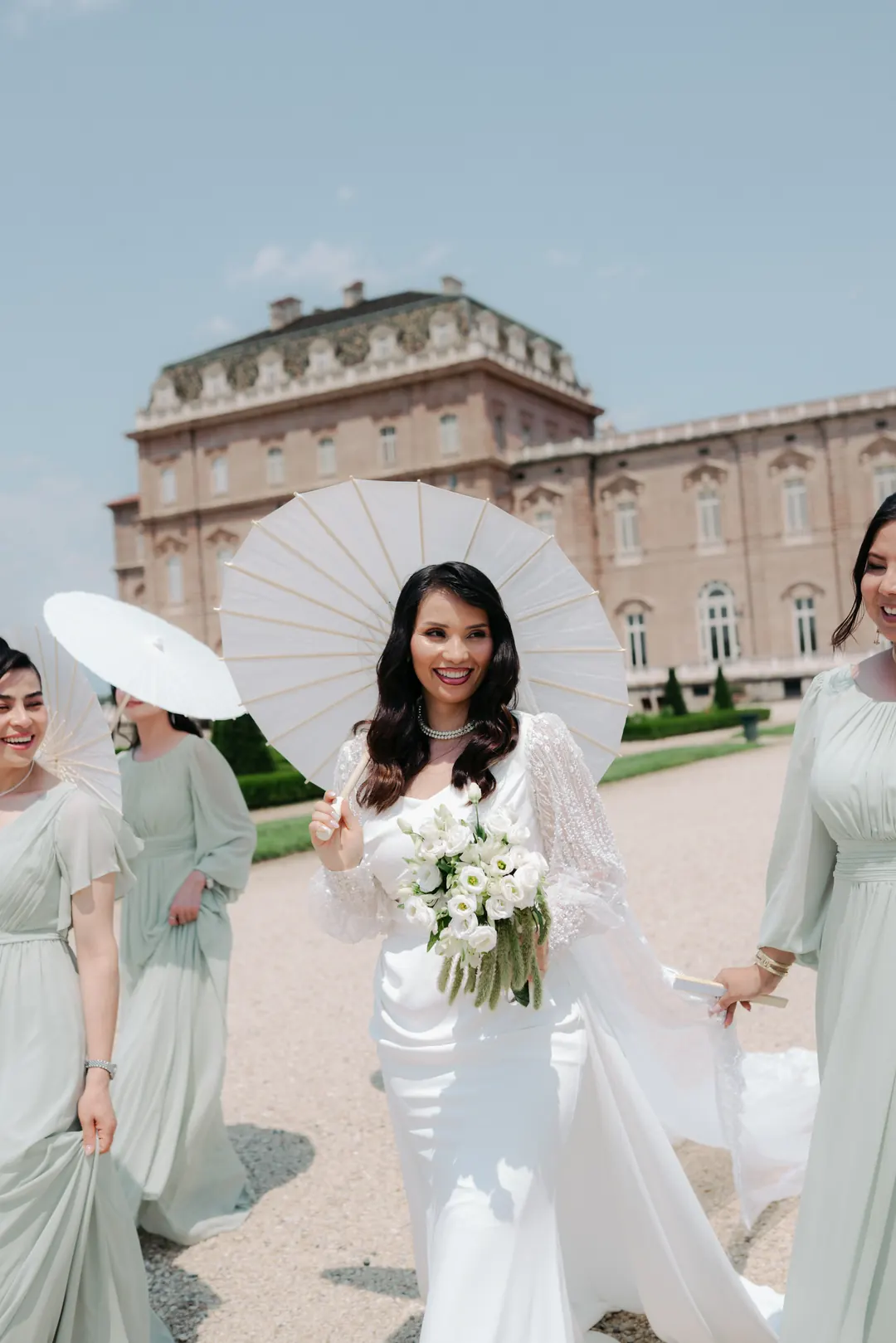
In Baku I photographed Haji and Narmin's wedding in October 2024 (see their story), and Allahverdi and Kimya's at the Four Seasons Hotel Baku in August 2026, from a suite over the Caspian to the dance floor (their story). In Piedmont my work includes Mohammed and Hejrat's civil ceremony and their day at the Reggia di Venaria Reale (their story), and a pre-wedding session for Musa and Solmaz in Susa, in the Alpine foothills, before their wedding in Baku (their story).
I shoot photo and film myself on one timeline, so nobody chooses between photographer and videographer when the ribbon is tied. My style is calm and documentary: I would rather you forgot I was there than felt posed. For families from Türkiye, my page on Turkish weddings in Italy covers kına, takı and halay. For a long toy, my Signature Experience covers up to 12 hours, and a second photographer or videographer can be added so both families are covered at once.
FAQ
Can we have a full Azerbaijani toy at an Italian venue?
Yes, if you choose the venue for it. You need room for your full guest list, a live band with amplification, a central dance floor and a music curfew late enough for the night you have in mind. Ask each venue about these four points in writing before you visit.
What is a nulla osta and where do Azerbaijani citizens get one?
It is a declaration that nothing in your national law prevents the marriage, required by article 116 of the Italian Civil Code. The Embassy of Azerbaijan in Rome issues it as a certificate of celibacy to citizens living outside Azerbaijan. Your comune will usually want the consulate's signature legalised at the Prefettura. Always confirm the exact requirements with the comune where you marry.
Is a symbolic ceremony a good option?
For many couples, yes. You marry legally in Azerbaijan, then hold the ceremony in Italy with no paperwork, at any hour and in any space your venue allows. It also leaves your families free to arrange a kəbin at home if they wish. Guests rarely know or mind which ceremony carries the legal weight.
How early should guests from Azerbaijan apply for Schengen visas?
Applications can go in up to six months before travel and no later than 15 days before. Processing normally takes 15 days but can take up to 45, so I suggest guests apply three to four months ahead. The fee for Azerbaijani citizens is €35. Send invitations early so elderly relatives have time to gather documents.
Can the music go on past midnight in Italy?
Sometimes. Finishing times depend on local rules and the venue's own licence, and villas close to homes are often strict. Some venues allow music indoors later than outdoors. Get the exact time written into your contract, and plan the timeline backwards from it so the bride's dance and the last Yallı do not get cut short.
Can we bring halal food or our own cooks?
Often, yes. Many caterers can source halal meat on request, and some venues allow a family cook to prepare one or two dishes. Policies vary, so ask each venue in writing. Check who certifies the meat, how the kitchen keeps it separate, and how tea and sweets are served late into the night. These details shape the evening as much as the menu.
Do you speak Azerbaijani with our families?
Yes. I speak Azerbaijani, Russian, Turkish, English and Italian, and I talk with families and guests in their language on the day. Elders can tell me what matters to them, and I can direct a family photograph without a translator. The optional free 20-minute video call before booking can be in Azerbaijani too.
Will you photograph the xınayaxdı and the toy?
Yes. I can cover the henna night, the bride's departure and the toy, in Italy or in Baku. Coverage depends on the hours you book, and travel and accommodation are added transparently to the quote. Tell me the plan for each day and I will suggest what fits.
Let's talk about your toy
If you are planning an Azerbaijani wedding in Italy, or a toy in Baku with a celebration in Italy afterwards, send me your date and venue through the contact page. I reply personally within a day or two, in Azerbaijani, Russian, Turkish, English or Italian.
Sources
- Ministero della Giustizia: couples of different nationalities, marriage (article 116 Civil Code)
- Embassy of the Republic of Azerbaijan in Italy: the certificate of celibacy (Nulla Osta)
- Comune di Lucca: weddings for foreigners not living in Italy
- European Commission: applying for a Schengen visa
- Embassy of Italy in Baku: visas
- Nargiz Guliyeva, "Свадебные обряды азербайджанцев", IRS Heritage magazine, no. 4 (16), 2005
- Vikipediya: Azərbaycan toy adətləri
- Vikipediya: Şabaş
- Vikipediya: Vağzalı
- Wikipedia: Azerbaijani wedding traditions
Keep reading
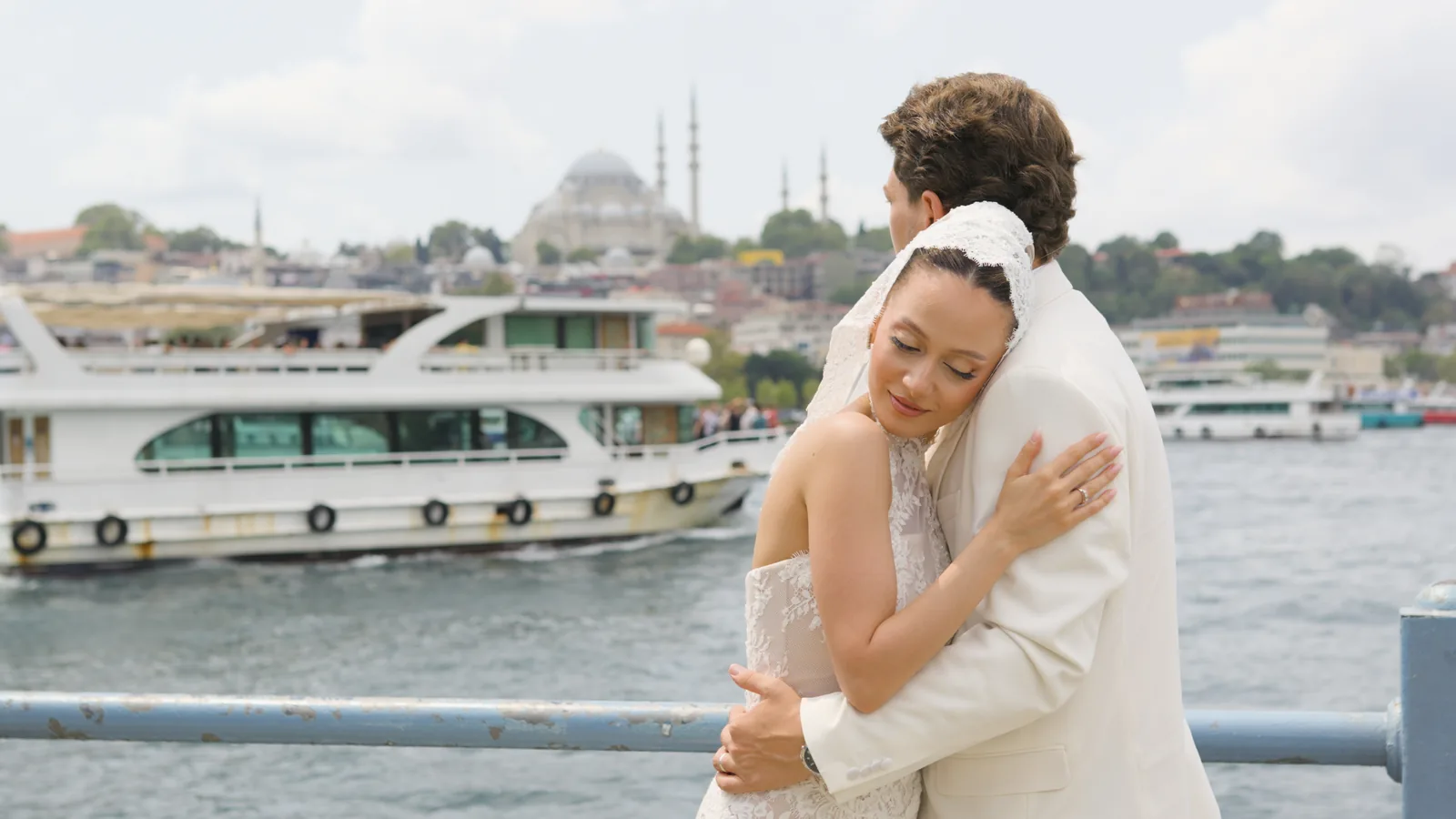 Turkish weddingsA Turkish wedding in Italy: traditions, venues and documentsA Turkish wedding in Italy needs a venue that understands a düğün: a long guest list, davul and zurna, a takı töreni and a dance floor that stays full. Here is how the traditions fit, what Turkish citizens need to marry legally in Italy, and how I can help.
 Planning guideHow much does a wedding photographer cost in Italy? Real prices for 2027Italian couples spend on average €1,850 on wedding photography, and in a 2025 survey most photographers in Italy charged €1,500 to €2,500 for a full day. Couples travelling in for a destination wedding usually see €3,000 to €8,000, more on Lake Como and in Puglia, and over €10,000 at luxury studios.
 Planning guideNikah in Italy: a practical guide to a Muslim wedding in ItalyYou can hold a nikah in Italy, and many couples do, but on its own it does not make you married under Italian law. Here is how couples usually combine a civil ceremony, the nikah and the celebration, and what to ask venues about halal food, prayer space and privacy.