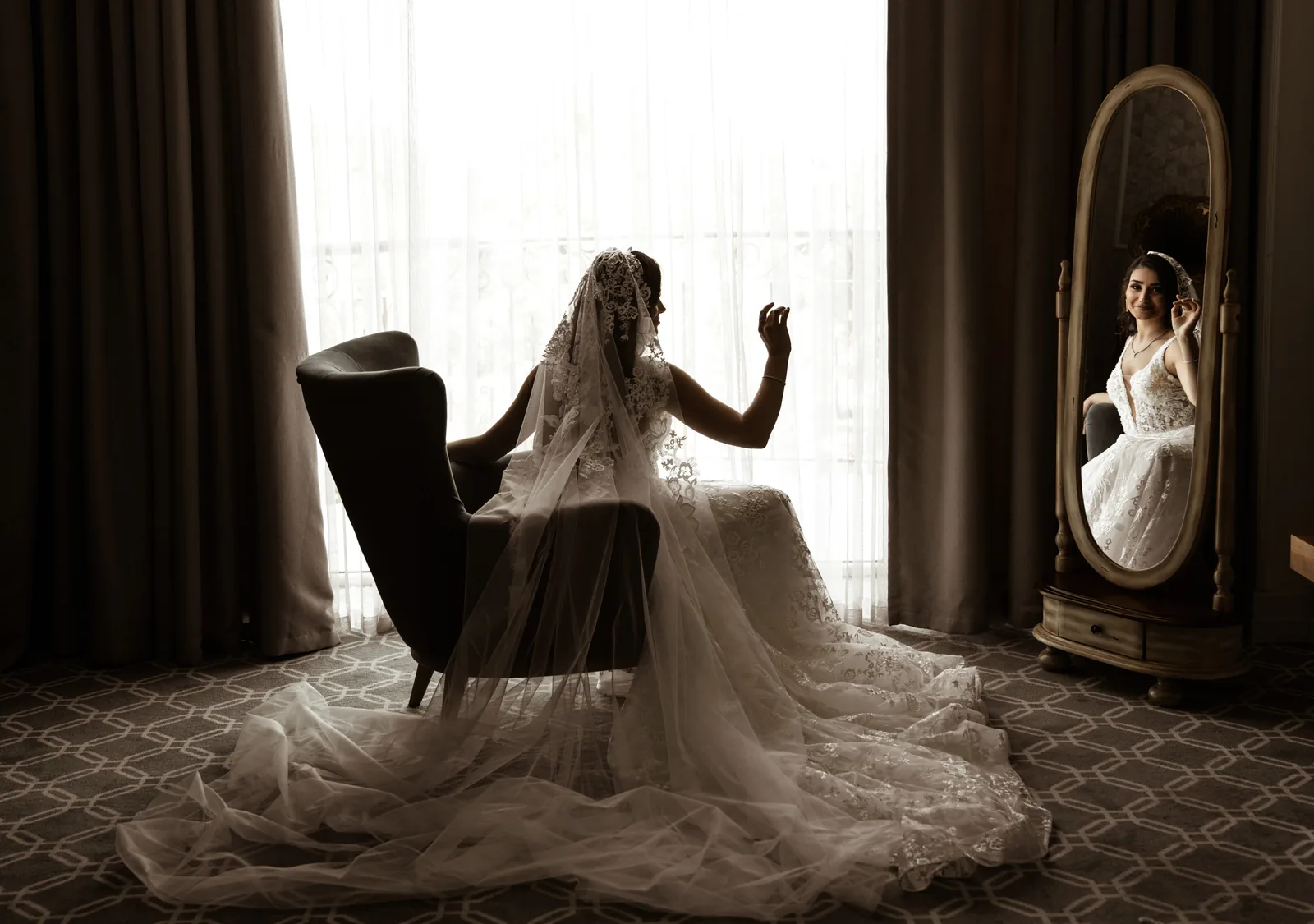
Arab wedding in Italy: a practical guide for Middle Eastern families
An Arab wedding in Italy goes smoothly when the venue understands three things before you sign: privacy, separate spaces when the families want them, and a night that runs late with drums at its heart. Here is how the henna night, the contract, the zaffa and the celebrations fit Italian venues and Italian rules.
An Arab wedding in Italy can mean a Lebanese wedding in a Tuscan villa, an Egyptian zaffa down a palace staircase, or an Emirati wedding on Lake Como with a women's celebration in one hall and the men in another. I am a wedding photographer and filmmaker based in Turin. This guide covers the practical side of a Middle Eastern wedding in Italy: venues, timings, rules, the law and the camera.
Traditions differ between the Gulf, the Levant, Egypt, Iraq and the Maghreb, between cities and villages, and between Muslim and Christian families. I describe the common ground and point out where it varies. Your families, and your imam or priest, have the final word.
Why Arab families choose Italy
Italy offers what many families want from a destination wedding: villas and lake hotels that can be booked for exclusive use, gardens with no neighbours looking in, generous food, and Milan within reach for fittings and shopping. Lake Como, Tuscany and the Amalfi Coast are the famous names; Piedmont and Lake Maggiore are quieter alternatives.
Before you choose a date, check the visa rules for every guest. They differ between Gulf states and across the Arab world, and a Schengen visa application can go in no earlier than six months and no later than 15 days before travel.
How the traditions fit an Italian venue
The henna night
A day or two before the wedding, the bride celebrates with her female friends and relatives: henna on her hands and feet, music, dancing and gifts. In Italy it fits well in a villa salon, a hotel function room or a private dining room. Tell the venue it is a women-only evening with music, so they staff it accordingly and nobody wanders in.
The marriage contract
The katb al-kitab is the signing of the marriage contract before witnesses, usually with the mahr, the gift the groom commits to the bride. In the Emirates the couple often exchange rings at the signing, in a small ceremony called the milcha. It can take place at home, at a mosque, in a hotel suite or at the venue. My guide to a nikah in Italy covers finding an imam, the documents and the order of the day.
The zaffa
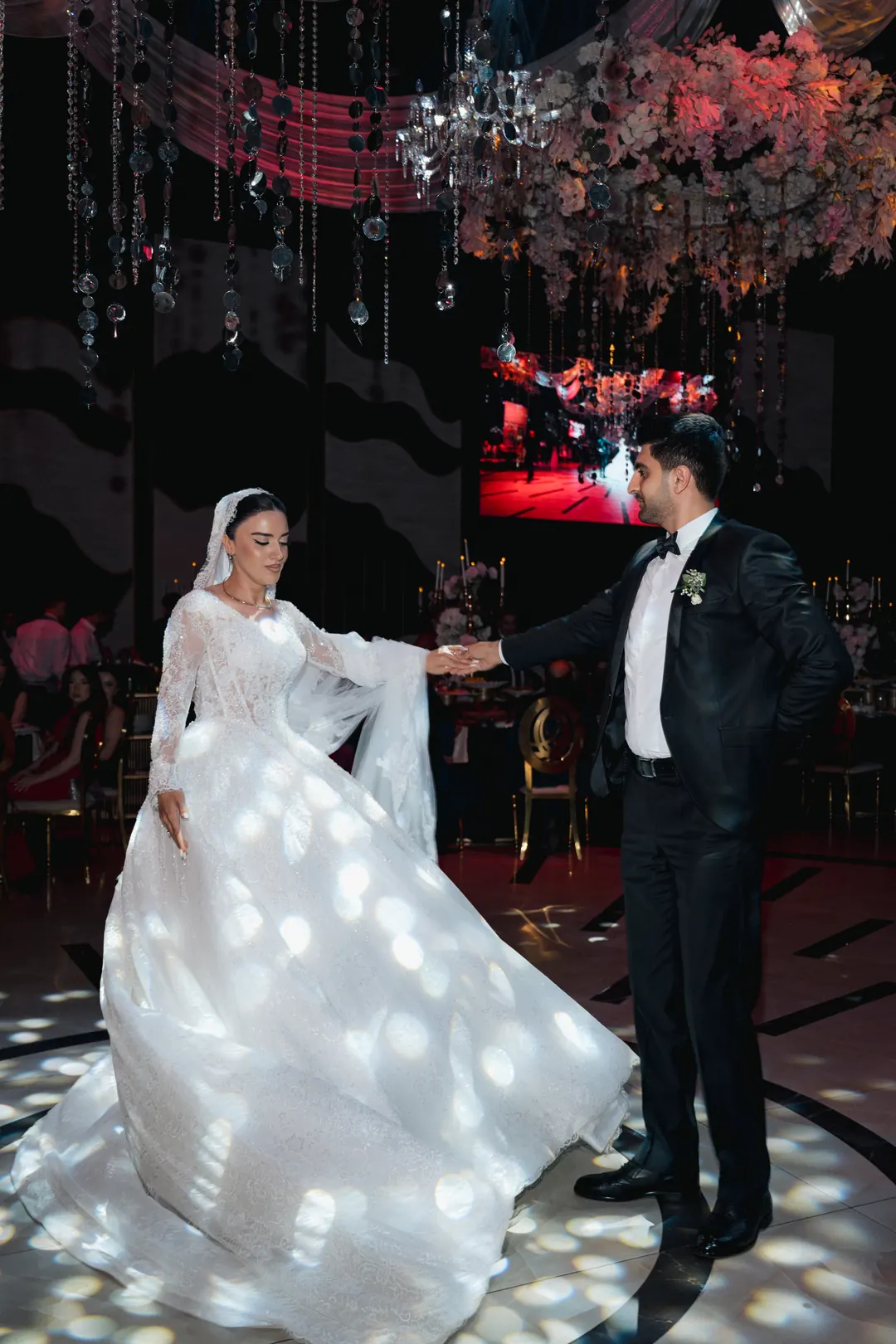
The zaffa is the procession that opens the celebration: drums, music, joyful shouts, sweets and flowers thrown over the couple. In 2025 UNESCO inscribed "the zaffa in the traditional wedding" on its list of the intangible cultural heritage of humanity, in a nomination shared by Djibouti, Comoros, the United Arab Emirates, Iraq, Jordan, Mauritania and Somalia. An Egyptian zaffa can bring bendir drums, bagpipes, horns, dancers and men carrying flaming swords. In the Levant, the dabke, a line and circle dance, is widely performed at weddings.
For an Italian venue, the zaffa raises three questions. Where does it walk, from the bridal suite to the hall, and are there stairs, gravel or a garden path on the way? How loud is it, and at what time? And is there fire, which needs the venue's written approval? Whoever books the troupe, ask whether they have worked at your venue before.
Separate celebrations for women and men
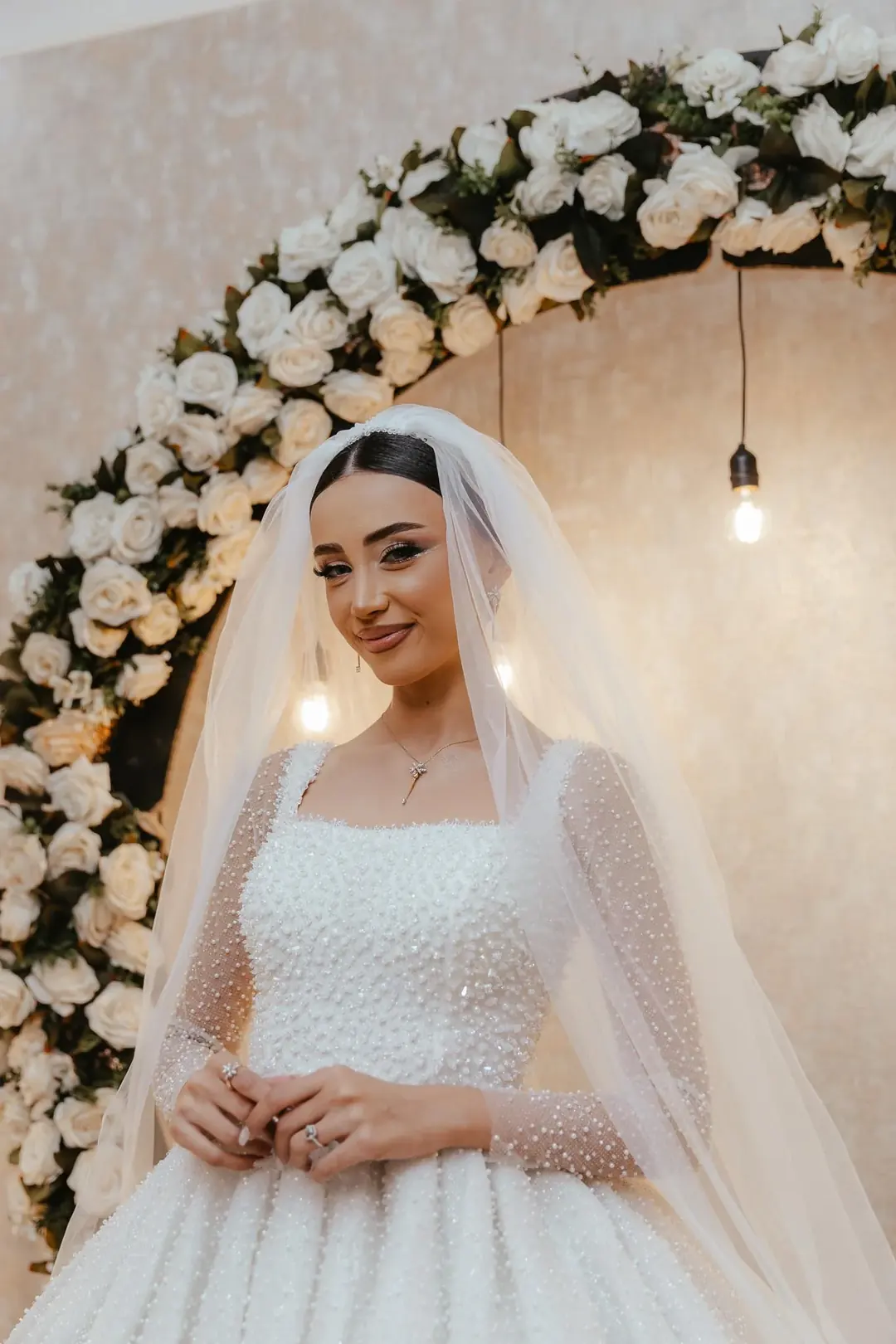
At Emirati weddings, and at some others across the region, women and men celebrate separately. At an Emirati wedding the bride's celebration lasts about three to four hours and is where the party really happens, while the men's gathering is simpler. When the groom joins the women's hall, a change of music signals to the women to cover their hair and shoulders.
In Italy that needs two halls close together, or one hall and a terrace, with doors that close, windows that are not overlooked, and staff who knock. Some families ask for women only to serve in the women's hall; ask the venue early whether they can staff it that way.
| Event | Italian setting | Ask the venue |
|---|---|---|
| Henna night | Villa salon, private dining room | Women-only access, music, henna artist |
| Contract | Suite, mosque, small salon | A table, quiet, an imam's needs |
| Zaffa | Grand staircase, terrace, garden path | Route, drums, any fire, timing |
| Women's celebration | Ballroom with closing doors | Female staff, privacy, stage for the bride |
| Men's celebration | Second hall, terrace, garden | Distance from the women's hall, coffee service |
| Reception | Ballroom or marquee | Halal menu, dry bar, last music time |
Timing: prayers, Ramadan, heat and late nights
In June the sun sets after 9 pm in northern Italy, so Maghrib falls in the middle of dinner and Isha very late. Plan a pause for each prayer, check the exact times for your date, and tell the caterer.
Ramadan is expected around 8 February to 8 March 2027 and around 28 January to 25 February 2028; Eid al-Adha falls in mid-May in 2027 and early May in 2028. Exact dates depend on the moon sighting your community follows.
Summer is when many families travel, and also the hottest and busiest time in Italy. If you want August on Lake Como, book early and plan the outdoor parts for the evening. If your families expect a celebration that runs into the small hours, the music curfew becomes the most important line in the contract: each comune sets noise limits and can authorise events above them, and venues add their own rules. Fireworks need a licence from the local public safety authority.
Venue requirements
Privacy. Ask for exclusive use: no other weddings, no public restaurant, no tour groups in the garden. Ask how the venue handles staff phones and confidentiality, and whether you may set a phone policy for guests. On Lake Como, remember that public boats and private launches pass close to many villas, and that gardens visible from the water are visible to everyone.
Capacity and two halls. Count guests per event and per hall. A villa that seats 200 for dinner may not have two rooms of 100 near each other.
Halal food and an alcohol-free bar. Ask who certifies the meat, how it is kept separate, and for the full recipe list, because Italian kitchens cook with wine and cured pork appears in canapés by default. If you want a dry reception, get the alcohol-free package in writing. Ask whether your own cooks may prepare Arabic coffee, dates and sweets.
A prayer room. A quiet, clean room near the hall, space for wudu, prayer mats and a sign on the door. From Turin and Lake Como the qibla lies roughly south-east.
Arrival. On the lakes, ask about boat landings and parking for coaches. In historic centres, ask about restricted traffic zones before you book cars.
The legal side
A nikah or katb al-kitab alone has no civil effect in Italy: no Islamic organisation has an agreement (intesa) with the Italian state, and the one narrow exception is explained in my nikah guide. Couples marry civilly in Italy, with a nulla osta from their own country, or legally at home before the celebration. My guide to civil weddings in Italy for foreigners explains each step, and my page on getting married in Italy from the UAE covers documents for couples from the UAE.
Christian couples have other routes. A Catholic wedding, in the Latin rite or an Eastern Catholic rite, can have civil effect as a concordat marriage under the 1984 agreement between Italy and the Holy See, provided the parish completes the civil formalities; ask your parish and the Italian diocese early. For other churches, ask whether the minister can give the marriage civil effect in Italy, and if not, add a civil ceremony. Either way, ask your embassy how to register a marriage celebrated in Italy back home.
Photography and film planning
The women's celebration. Often no photography is allowed there at all, or only by close friends on the understanding that nothing is shared. I am a man, and I will say so plainly. If the women's hall is closed to me, I stay out entirely. If you want it photographed, you or your planner can book a female photographer for that hall, and I share the timeline and style notes with her so the two galleries feel like one wedding.
Two halls at once. When the women's and men's celebrations run in parallel, one person cannot be in both. A second photographer or videographer can be added to any collection, and on a multi-day wedding I write a tailored proposal for each event.
The moments that matter. The henna, the signing if the imam agrees, the zaffa arriving, the bride's entrance, the groom joining the women's hall if the families allow it, the dabke, the cake, the fathers. Write me your list, including the people who must be photographed and those who must not.
Etiquette. I never use flash during the ceremony. I take my shoes off in prayer spaces, and I do not photograph people praying unless the family asks. Portraits are as modest as you want them: holding hands, walking side by side, foreheads together.
Privacy afterwards. Tell me which images, and which guests, must never appear publicly, and we put it in the agreement.
Lake Como light. Couple portraits are best in the last hour before sunset, around 9:15 pm in mid-June. I am a registered EU drone pilot (ENAC, A1/A3), and I fly only where the rules, the venue and your privacy allow.
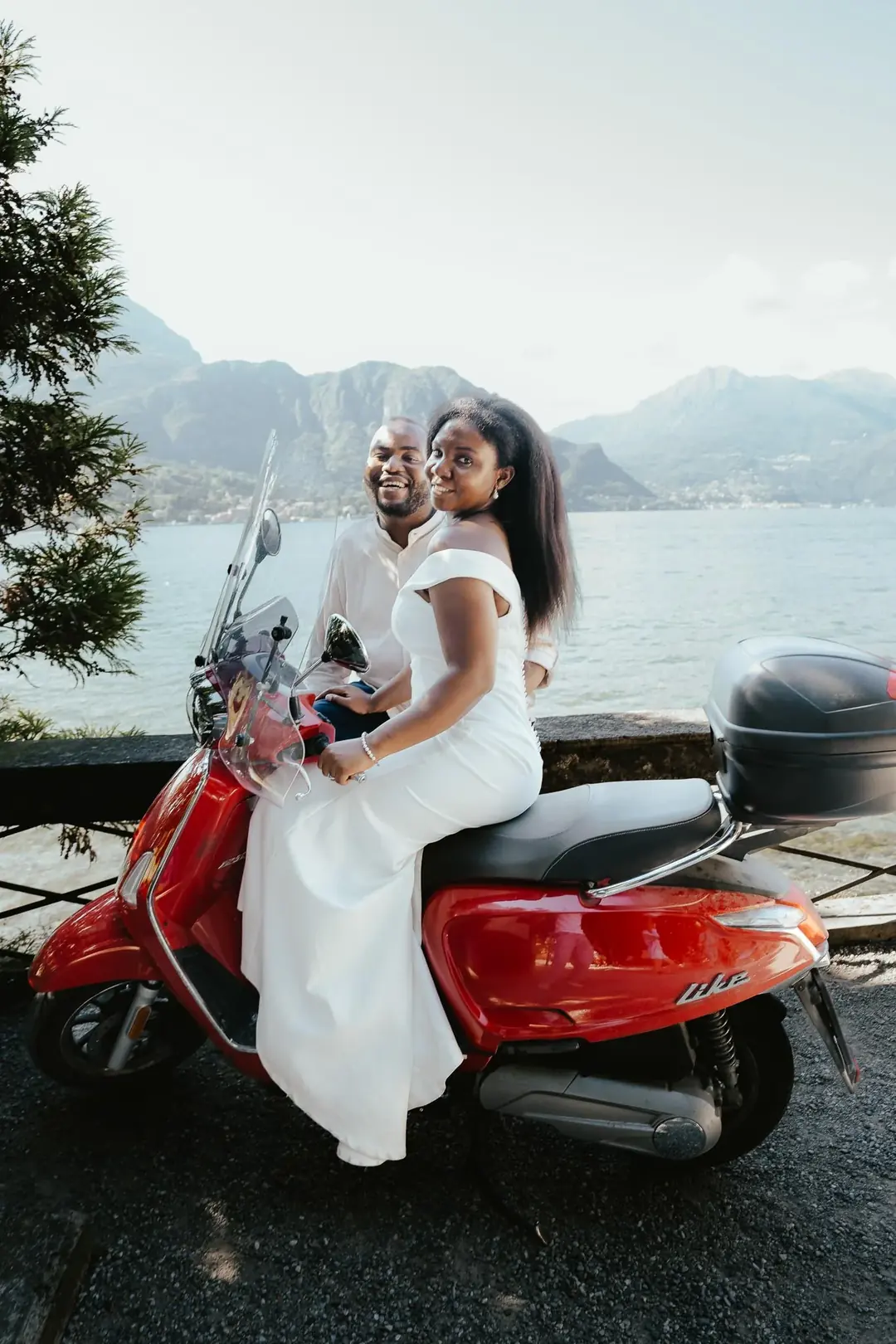
How I can help
I will be honest: the weddings on my work page are in Piedmont, on Lake Como, in Baku and in Istanbul, and Arab weddings are not among them yet. What I bring is a calm, documentary way of working, respect for the rules your families set, and one person shooting photo and film on one timeline.
Every collection includes a pre-wedding consultation, where we plan the day around prayers, the zaffa, separate spaces and the evening light. I work directly with planners. I speak English, Italian, Turkish, Russian and Azerbaijani, not Arabic; with your families I work in English. I send my collections and prices personally once I know your date and venue, and my guide to what a photographer costs in Italy shows typical prices.
FAQ
Can we have a zaffa at an Italian wedding venue?
Usually, yes. Agree the route with the venue, from the bridal suite to the hall, and check stairs and garden paths. Drums count as music under local noise rules, so agree the time. Flaming swords or any open fire need the venue's written approval. Ask the troupe whether they have worked at your venue before.
Can a venue in Italy host separate celebrations for women and men?
Many can, if you choose the venue for it. You need two halls close together, or a hall and a terrace, with doors that close and windows that are not overlooked. Ask whether the venue can staff the women's hall with women, and get the layout and the staffing in writing before you sign.
Can you photograph the women's celebration?
I am a man, so tell me early what your families allow. Often no photography is allowed there, or only by close friends. If you want it photographed, you or your planner can book a female photographer for that hall, and I coordinate the timeline and style with her. I stay out of any room I am asked to leave.
Is a nikah or katb al-kitab legally valid in Italy?
Not on its own. No Islamic organisation has an intesa with the Italian state, so in practice the contract alone has no civil effect here; my nikah guide explains one narrow exception. Couples marry civilly in Italy with a nulla osta from their own country, or legally at home before the celebration. Ask your embassy how to register an Italian marriage at home.
Can we have halal food and no alcohol at an Italian venue?
Yes, if you ask at the first meeting and get it in writing. Ask who certifies the meat and how it is kept separate, and read the recipes: wine goes into sauces and desserts, and cured pork into canapés. Agree an alcohol-free bar, and ask whether your own cooks may serve coffee, dates and sweets.
When is the best time for an Emirati wedding on Lake Como?
May, June and September give long evenings without the heaviest heat and crowds. July and August are hot and busy, so book venues very early and plan outdoor moments for the evening. Avoid Ramadan, expected around 8 February to 8 March 2027, and check Eid al-Adha in mid-May 2027.
Can you keep our wedding photos private?
Yes. Tell me before the day which images and which guests must never appear publicly, and we write it into the agreement. On the day, I follow the families' rules about who may be photographed, and I can stay out of any room or moment you choose.
Planning your Arab wedding in Italy
If you are planning an Arab or Middle Eastern wedding in Italy, send me your date and venue through the contact page. I reply personally within a day or two, and we can talk through the plan on a free 20-minute video call.
Sources
- UNESCO: The zaffa in the traditional wedding, Representative List of the Intangible Cultural Heritage of Humanity (2025)
- Abu Dhabi Culture: Al Zaffa (bridal procession)
- The National: Emirati wedding traditions (November 2022)
- Wikipedia: Zaffa (Egyptian and Levantine processions)
- Wikipedia: Dabke
- Presidenza del Consiglio dei Ministri: agreements (intese) with religious denominations
- Presidenza del Consiglio dei Ministri: the 1984 agreement between Italy and the Holy See (Law 121/1985)
- Ministero della Giustizia: couples of different nationalities, marriage (article 116 Civil Code)
- Legge 26 ottobre 1995, n. 447 (noise), article 6, Normattiva
- Regio decreto 18 giugno 1931, n. 773 (TULPS), article 57: licence for fireworks, Normattiva
- European Commission: applying for a Schengen visa
- Wikipedia: Ramadan (dates 2024 to 2028)
- Navigazione Laghi: public boat services on Lake Como
- d-flight, Italian drone portal and restricted zones
- NOAA solar calculator, used for sunset times
Keep reading
 Planning guideNikah in Italy: a practical guide to a Muslim wedding in ItalyYou can hold a nikah in Italy, and many couples do, but on its own it does not make you married under Italian law. Here is how couples usually combine a civil ceremony, the nikah and the celebration, and what to ask venues about halal food, prayer space and privacy.
 Planning guideGetting married in Italy from the UAE: documents by passport, nikah, flights, budget and visasIf you live in the UAE, your passport decides the paperwork for a legal wedding in Italy, not your residence visa. You can marry at an Italian town hall with a nulla osta from your own country, or marry in the UAE and celebrate in Italy. Here is how each route works, with flights, a budget in dirhams and visas for your guests.
 Planning guideCivil wedding in Italy for foreigners: the documents, the steps and the rules by nationalityTwo foreigners can marry legally in Italy, and the marriage is normally recognised at home. You need a nulla osta from your own country, translated and stamped documents, two witnesses and a booking with the town hall. Here is how it works, step by step and nationality by nationality.