Indian wedding in Italy: a practical guide for couples and families
An Indian wedding in Italy is very possible, but it asks more of a venue than most Italian weddings do: several events over two or three days, a sacred fire, a baraat with a dhol, food from home and a dance floor that fills late. Here is how those pieces fit Italian venues, Italian rules and Italian light.
An Indian wedding in Italy is rarely one event. It is a mehndi in a garden, a sangeet in a ballroom, a baraat coming up a villa drive, a ceremony around a fire and a reception that runs late, often across three days. I am a wedding photographer and filmmaker based in Turin, and this guide covers the practical side: how an Indian destination wedding meets Italian venues, rules and timings.
There is no single Indian wedding. A Punjabi, Gujarati, Tamil, Bengali or Konkani family will order the days differently, and Hindu, Sikh, Jain, Muslim and Christian weddings each have their own heart. I describe the common ground; your priest and your families have the final word.
Why couples choose Italy for an Indian wedding
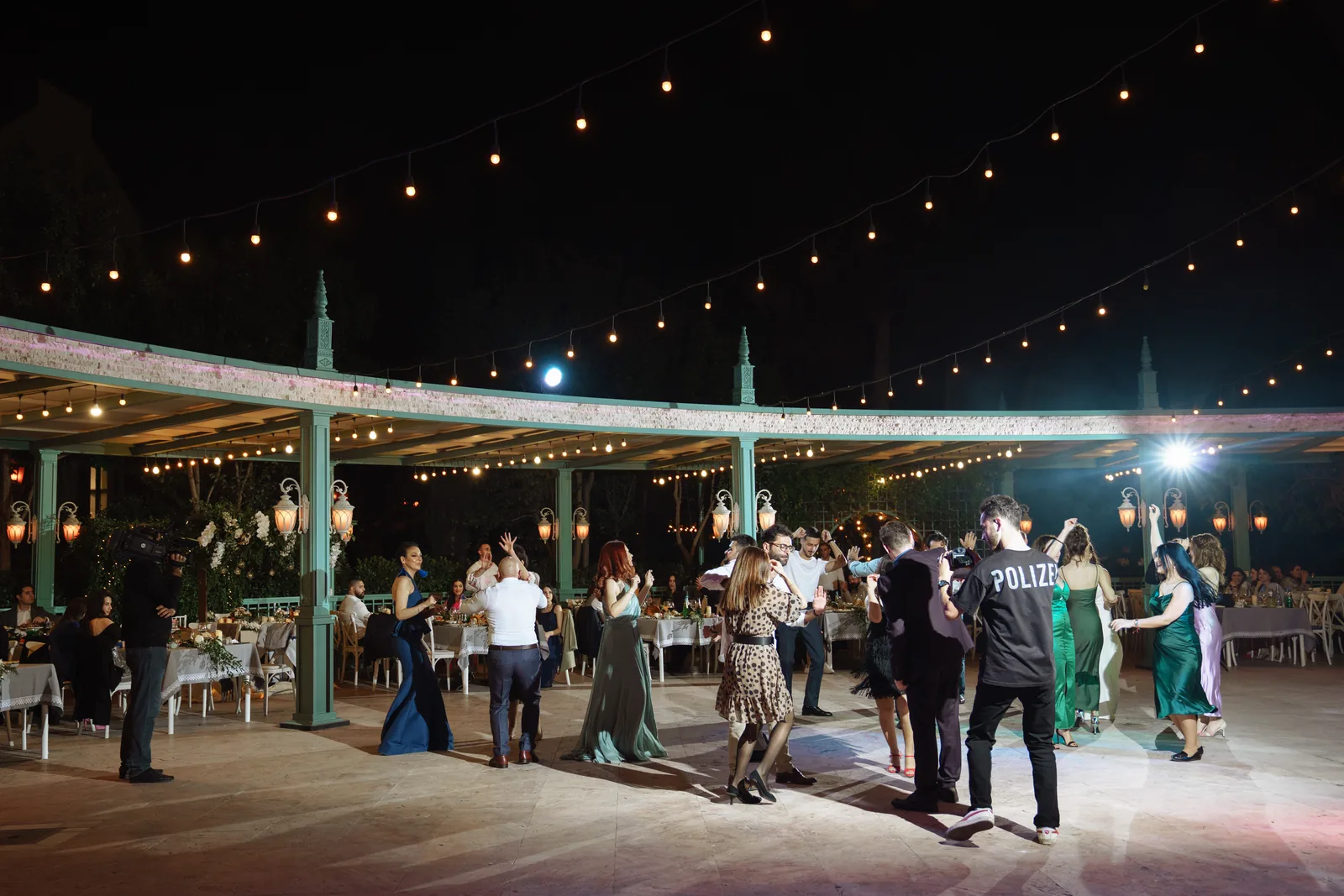
The reasons are practical. Italy has villas, castles and lake hotels that can host a whole family for several days, with a different space for each event: a lawn for the haldi, a terrace for the mehndi, a ballroom or marquee for the sangeet. And Italian kitchens are used to feeding long tables.
There are well-known precedents too: two widely reported weddings, one at Borgo Finocchieto in Tuscany in December 2017, another at Villa del Balbianello on Lake Como in November 2018. Neither is a template, but both show that a full Indian wedding can sit in an Italian landscape.
The catch is travel. Guests from India need a Schengen visa, which can be requested up to six months before the trip and no later than 15 days before. Send save the dates early.
How the events fit an Italian venue
Most Italian venues are built around one day: ceremony, aperitivo, dinner, dancing. A multi-day Indian wedding asks them to reset spaces overnight and host things they may never have seen. This is how the usual events map onto a villa or hotel.
| Event | Time of day | Italian setting | Ask the venue |
|---|---|---|---|
| Mehndi | Afternoon | Garden, terrace, shaded courtyard | Shade, seating for the bride for several hours, a henna artist |
| Haldi | Morning | Lawn or poolside | Turmeric stains: protected floors, old linen, a shower nearby |
| Sangeet | Evening | Ballroom, marquee, lower garden | Stage, sound system, curfew, dressing room for performers |
| Baraat | Before the ceremony | Driveway, private road, garden path | Dhol, horse or car, noise, route on private land |
| Ceremony | Set by the muhurat | Mandap on a lawn or covered terrace | Open flame, seating, shade, the priest's needs |
| Reception | Evening into night | Dining hall or marquee | Indian menu, bar policy, last music time |
Ask how long each space needs to be reset, and by whom. A sangeet that ends at 1 am and a haldi at 10 am on the same lawn makes a short night.
The muhurat, Chaturmas and the Italian season
The ceremony time often comes from the muhurat, the auspicious moment your priest or family astrologer chooses. It can fall at noon, at dawn or late at night, so share it with the venue before you sign: some kitchens and staff rotas are not built for a 6 am ceremony.
Many Hindu families also avoid weddings during Chaturmas, the four months from Shayani Ekadashi (June or July) to Prabodhini Ekadashi (October or November). That cuts across Italy's main season, so families who observe it often look at May and June, or at the weeks after Prabodhini Ekadashi, when evenings are shorter and cooler. Your priest will give you the exact dates.
Fire, the havan and the mandap
In Hindu tradition Agni, the sacred fire, is the primary witness of the marriage, and the saptapadi, the seven steps, is taken around it. That makes fire the first question for any Hindu wedding venue in Italy.
Many historic interiors will not allow an open flame, so the mandap usually goes outdoors, on a lawn or a covered terrace, with a small, contained fire. Ask the venue to confirm in writing where the fire may burn and with which safety measures: an extinguisher nearby, a heat-proof base, nothing hanging above it. Make sure the rain plan still allows the fire.
Baraat, dhol, fireworks and noise
The baraat is the groom's procession, with music, dancing and often a horse or a decorated car. On a private drive it mainly needs the venue's consent and a sensible route; on a public road, the comune's permission.
Noise is a local matter in Italy. Each comune sets limits and can authorise temporary events above them, and venues add their own rules. Fireworks are stricter: lighting them in or near an inhabited place needs a licence from the local public safety authority. Ask the venue which suppliers already work there legally, and get the finish time for music written into the contract, indoors and outdoors separately.
Venue requirements: capacity, kitchens and caterers
Capacity across events. Count guests per event: the mehndi may be 80 people and the reception 300. Ask about exclusive use, rooms on site, how guests will move between hotels and events, and set-up times for your mandap builders, florists and DJs. Coaches on narrow lake or hill roads need planning.
Catering. Many Italian venues work with their own kitchen or a list of approved caterers. Some allow an external Indian caterer, usually for a fee and with conditions. Any caterer must be a registered food business under EU hygiene rules, with insurance, so ask for both. Ask whether the caterer may use the venue kitchen, bring a mobile kitchen or a tandoor, and how the two teams will share service.
Vegetarian and Jain menus. Say clearly what the menu must exclude. A Jain menu usually leaves out root vegetables such as onion, garlic and potatoes, which Italian cooking uses everywhere. Ask for recipes, not dish names, and hold a tasting with the family.
The bar. Some families want a dry wedding, others a full bar for the reception only. Many venues sell packages built around wine, so agree the policy for each event in writing.
The legal side
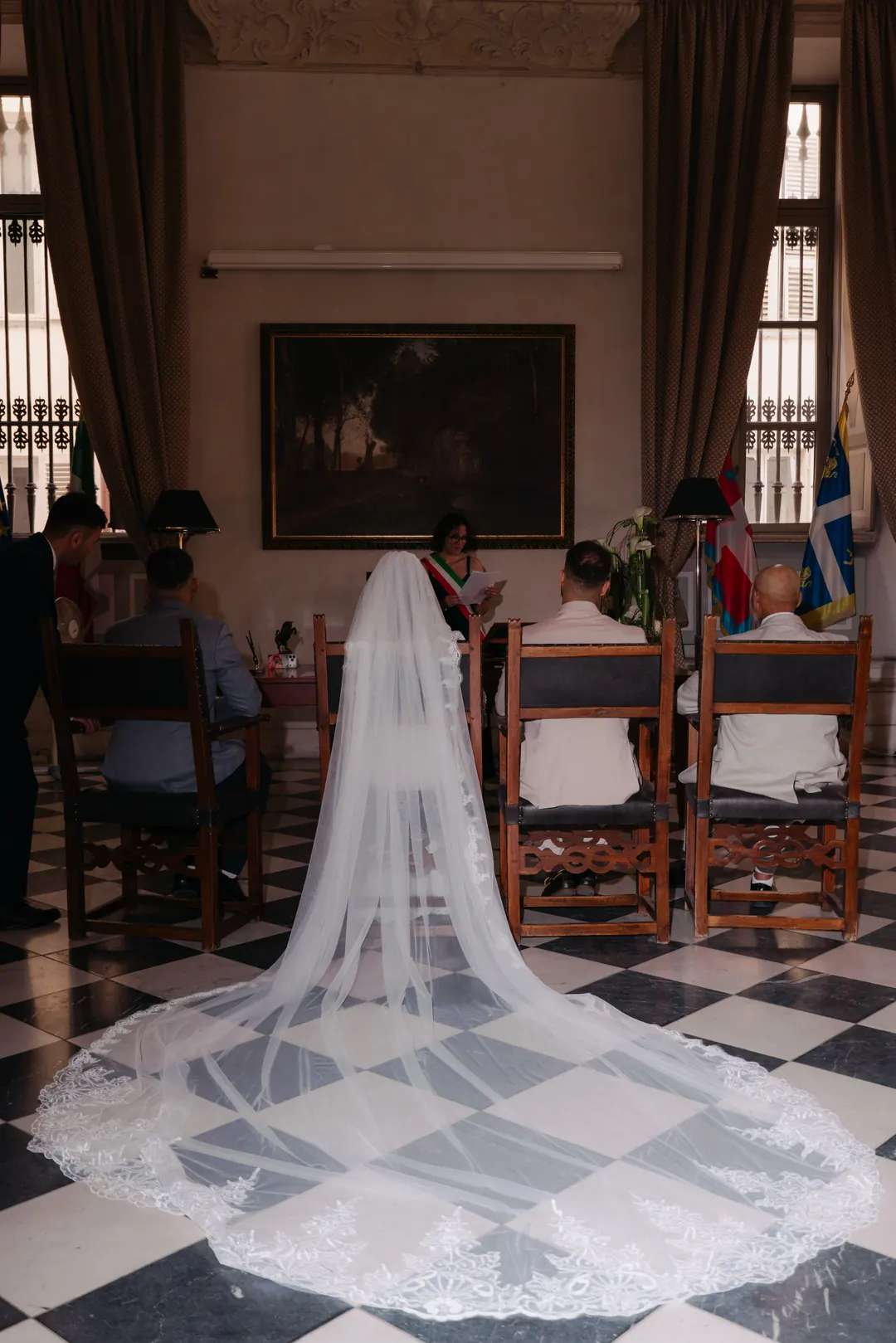
Hindu ceremonies. Italy has an agreement (intesa) with the Unione Induista Italiana, approved by Law 246 of 2012. A marriage celebrated before a UII minister who has Italian citizenship has civil effect, after publications at the comune and transcription in the civil register. A priest who flies in with your family performs a religious ceremony only.
Sikh ceremonies. In 2023 the Akal Takht banned carrying the Guru Granth Sahib to destination weddings at resorts and beaches, and the Sikh Council UK says every Anand Karaj must take place in a gurdwara. Italy has about 60 gurdwaras, so one plan is the Anand Karaj at a gurdwara and the celebration at the venue. Ask your own gurdwara at home first. There is no intesa for Sikhism, so add a civil ceremony or marry legally at home.
Other couples. My guide to a nikah in Italy covers Muslim weddings. Anyone can marry civilly in Italy with a nulla osta from their own country, or legally at home and simply celebrate here. My guide to civil weddings in Italy for foreigners covers the steps and Catholic weddings, and my page on getting married in Italy from India covers documents for Indian citizens.
Photography and film planning
How many hours, how many days
Each event needs its own coverage. My collections run up to 6, 8 or 12 hours a day, for several days I write a tailored proposal and send my prices personally, and the cost guide shows typical prices in Italy.
A second shooter
I recommend one. The baraat and the bride's preparations often happen at the same time in different places, and at the ceremony one camera on the mandap and one on the families shows both sides of every ritual. A second photographer or videographer can be added to any collection.
The moments that matter
Make me a list. Typical ones: the baraat arriving, the milni between families, the varmala, the kanyadaan, each of the pheras, the sindoor and mangalsutra, the vidaai. Then add the ones that are yours: a grandmother at the mehndi, a cousins' dance at the sangeet. Family portraits take longer at a big wedding, so write the groups down and ask a cousin who knows everyone to call names.
Light and timing
If the muhurat falls at midday, ask for shade over the mandap: hard sun on faces and gold is difficult for any camera. Couple portraits work best in the last hour before sunset, which in June comes around 9:15 pm on Lake Como and in Turin. I plan the wedding day timeline backwards from that.
Etiquette
I ask the priest before the ceremony where I may stand and what I must not do. I will not step onto the mandap without permission, I take off my shoes where the family asks, and I stay out of the priest's way during the rituals. Flash stays off near the fire.
How I can help
I will be plain: the weddings on my work page are in Piedmont, on Lake Como, in Baku and in Istanbul, and Indian weddings are not among them yet. What I bring is a calm, documentary way of working, and one person shooting photo and film on one timeline, so there is one less stranger at the mandap.
Every collection includes a pre-wedding consultation, where we build each day around the muhurat, the venue's rules and the evening light, with a rain plan. I work directly with planners. I speak English, Italian, Russian, Turkish and Azerbaijani; with your families I work in English. Read how I work step by step.
FAQ
Can we have a Hindu ceremony with a sacred fire at an Italian venue?
Often, yes, but ask first. Many historic interiors do not allow open flames, so the mandap usually stands on a lawn or a covered terrace with a small, contained fire, an extinguisher nearby and nothing hanging above it. Get the venue's written approval for the exact place, and make sure the rain plan still allows the fire.
Is a Hindu wedding legally valid in Italy?
It can be. Under Law 246 of 2012, a marriage celebrated before a minister of the Unione Induista Italiana who has Italian citizenship has civil effect, after publications at the comune and transcription in the civil register. A ceremony by a priest without that status is religious only, so couples add a civil ceremony or marry legally at home.
Can we have an Anand Karaj at our wedding venue in Italy?
The main Sikh religious authorities say no. In 2023 the Akal Takht banned carrying the Guru Granth Sahib to destination weddings at resorts and beaches, and the Sikh Council UK says every Anand Karaj must take place in a gurdwara. Italy has about 60 gurdwaras, so you can hold the Anand Karaj at one and celebrate at the venue. Ask your own gurdwara first.
Can we bring our own Indian caterer?
Sometimes. Many Italian venues have an exclusive kitchen or a list of approved caterers; others accept an external caterer for a fee. Ask for the policy in writing before you sign. Any caterer needs EU food business registration and insurance, and you should agree kitchen access, equipment such as a tandoor, and how service is shared.
Can we have a baraat with a horse, a dhol and fireworks?
On the venue's private drive, a baraat mainly needs the venue's consent; on public roads it needs the comune's permission. Fireworks near inhabited places need a licence from the local public safety authority, so use suppliers who already work legally at your venue. The dhol counts as music and falls under the same noise rules.
What time does the music have to stop?
It depends on the comune and on the venue's own licence. Comuni can authorise temporary events above normal noise limits, venues near homes are often strict, and some allow music indoors later than outdoors. Get the finish time for each event into the contract and plan the sangeet backwards from it.
How many hours of photography do we need for a three-day Indian wedding?
List the events first: a mehndi might need two hours, a sangeet four and the wedding day ten or more. My collections run up to 6, 8 or 12 hours a day; for several days I write a tailored proposal, with a second shooter where events overlap. Travel and accommodation are added transparently.
Planning your Indian wedding in Italy
Tell me your dates, the venue you are considering and which events you plan, and I will tell you honestly what I would cover and how. Send me your date and venue through the contact page. I reply personally within a day or two.
Sources
- Presidenza del Consiglio dei Ministri: agreements (intese) with religious denominations
- Legge 31 dicembre 2012, n. 246 (intesa with the Unione Induista Italiana), article 9 on marriage, Normattiva
- Ministero della Giustizia: couples of different nationalities, marriage (article 116 Civil Code)
- Legge 26 ottobre 1995, n. 447 (noise), article 6: municipal authorisations for temporary events, Normattiva
- Regio decreto 18 giugno 1931, n. 773 (TULPS), article 57: licence for fireworks, Normattiva
- Regulation (EC) No 852/2004 on the hygiene of foodstuffs, EUR-Lex
- European Commission: applying for a Schengen visa
- The Tribune: Akal Takht imposes ban on carrying of Guru Granth Sahib saroop for destination weddings (October 2023)
- Sikh Council UK: respect for Anand Karaj is paramount (October 2020)
- Wikipedia: Sikhism in Italy (gurdwaras)
- Wikipedia: Hindu wedding (Agni, saptapadi, regional variation)
- Wikipedia: Chaturmas
- Wikipedia: Jain vegetarianism
- The Quint: Virat Kohli and Anushka Sharma married in Tuscany (December 2017)
- Arab News (AP): Indian stars wed at Villa del Balbianello, Lake Como (November 2018)
- NOAA solar calculator, used for sunset times
Keep reading
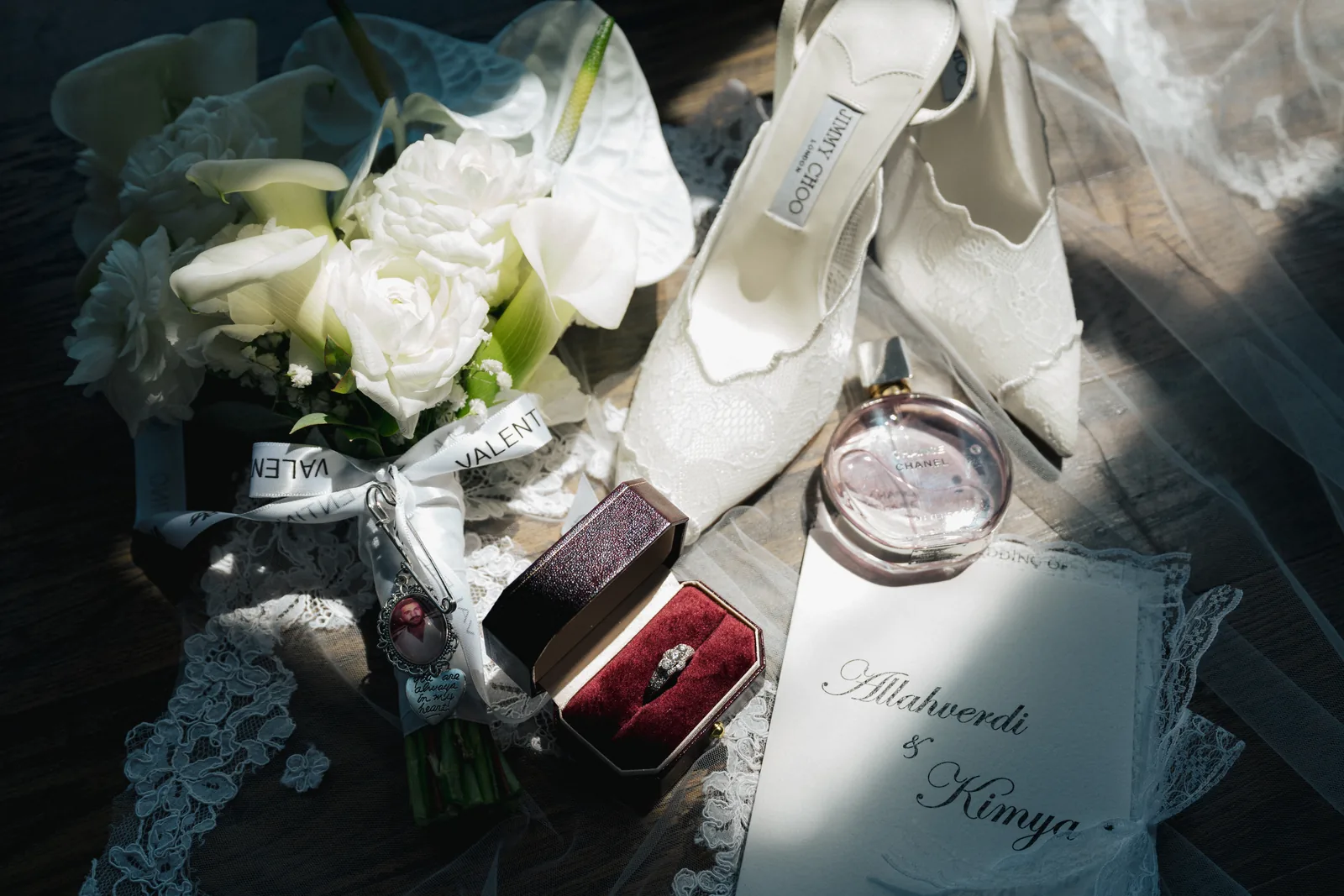 Planning guideGetting married in Italy from India: legal options, documents, guest visas and multi-day celebrationsIndian couples can marry legally in Italy, but the usual nulla osta works differently: Indian missions cannot certify that you are single on their own, so the proof starts in India. Here are the legal routes, the documents, visas for a large guest list, flights and a budget in rupees.
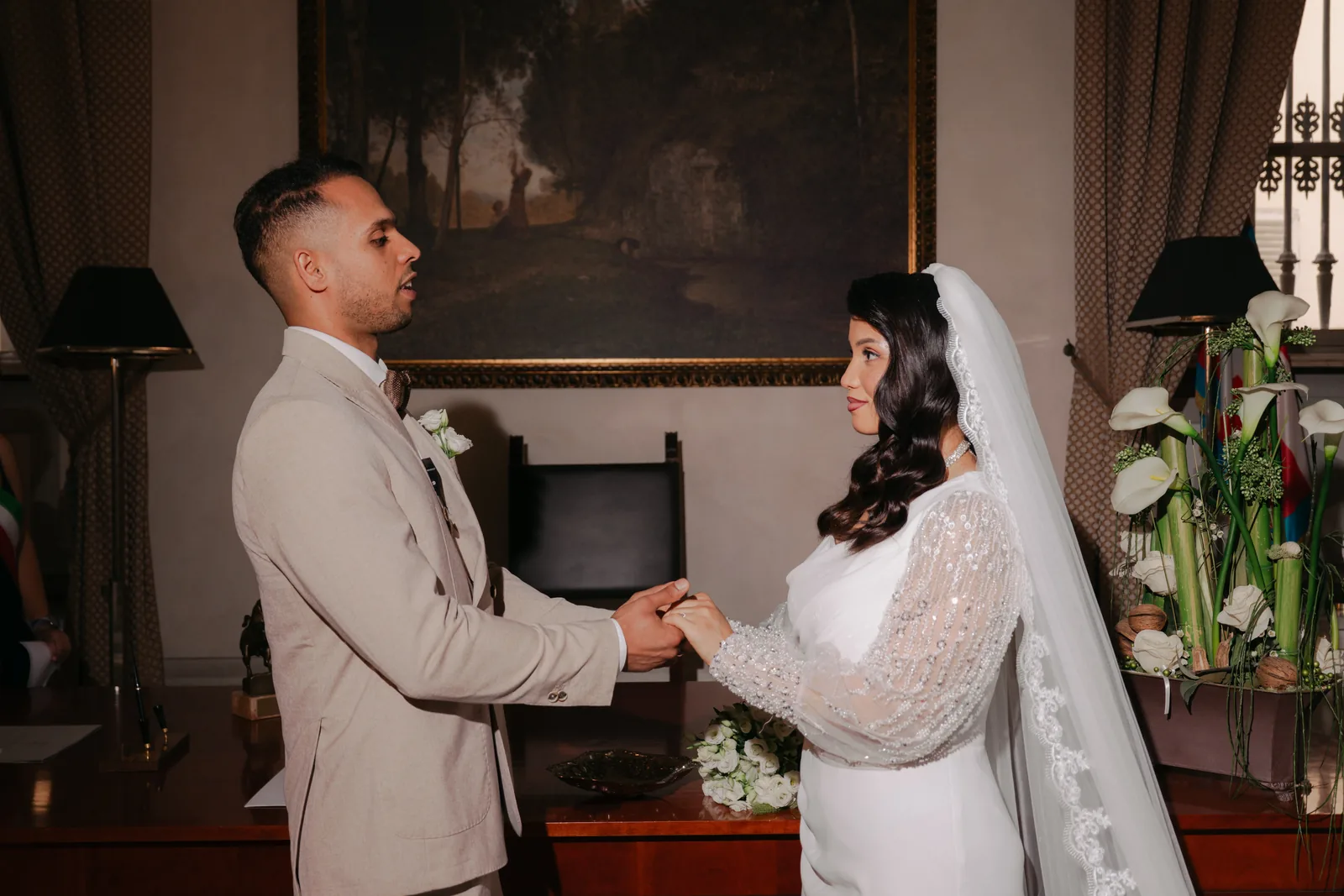 Planning guideCivil wedding in Italy for foreigners: the documents, the steps and the rules by nationalityTwo foreigners can marry legally in Italy, and the marriage is normally recognised at home. You need a nulla osta from your own country, translated and stamped documents, two witnesses and a booking with the town hall. Here is how it works, step by step and nationality by nationality.
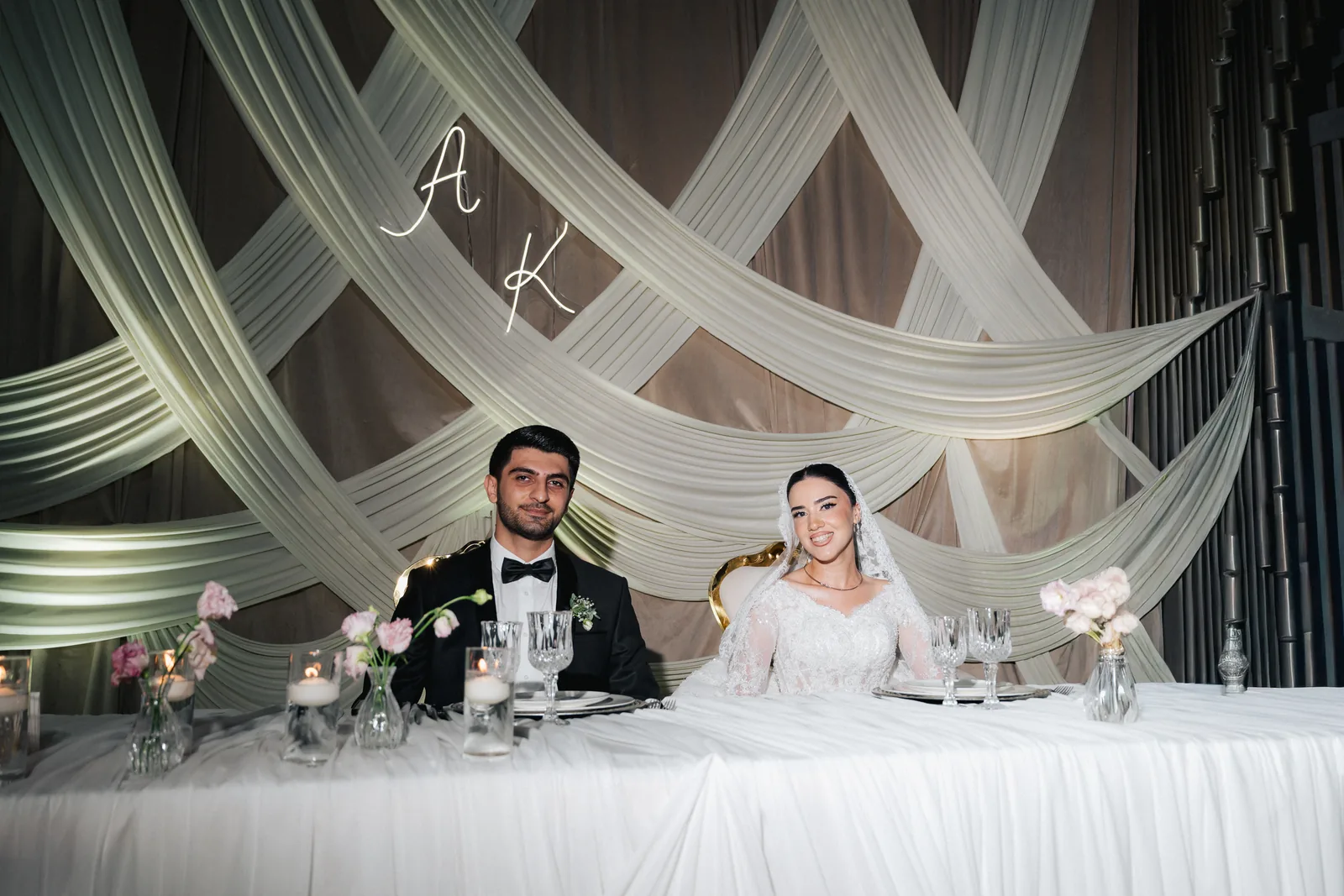 Planning guideWedding day timeline in Italy: five sample schedules built around the lightA good wedding day timeline starts from two fixed points, the ceremony and the sunset, and fills the hours between them with enough slack that nobody has to run. Here are five real-world schedules for Italy, with the hours of photography and film each one needs.