Getting married in Italy from Ireland: civil and Catholic routes, flights, budget and guests
Irish couples can marry legally in Italy with a Certificate of Freedom to Marry from the Department of Foreign Affairs, either at the town hall or in a Catholic church whose wedding is registered with the state. Here is how both routes work, plus flights from Dublin and Cork, the time difference, a budget in euros and what your guests need.
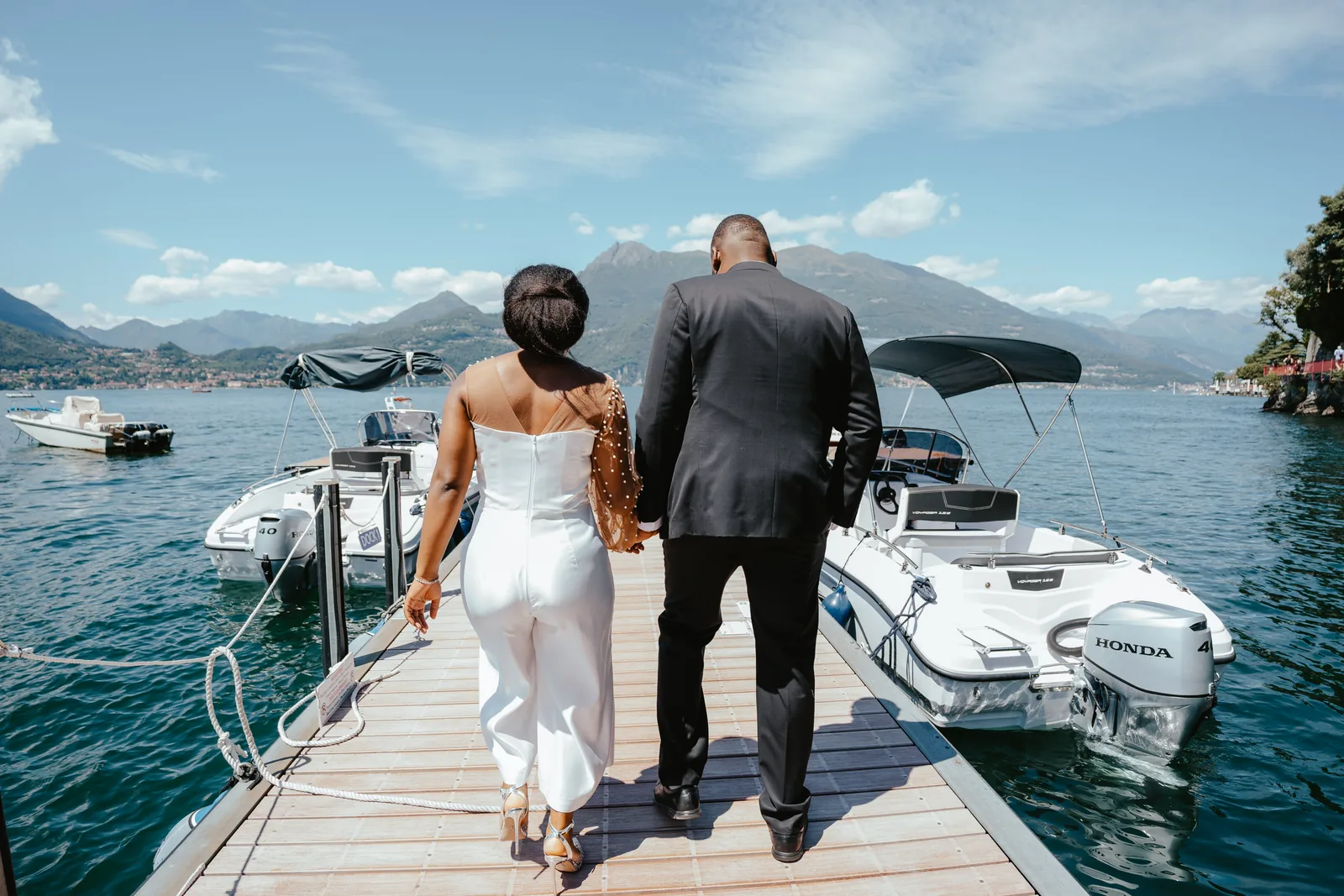
Getting married in Italy from Ireland is more straightforward than it looks from home. You share the euro, Italy is one hour ahead, there are direct flights from Dublin and Cork, and as EU citizens you need no apostille on your key document. The one document that matters comes from the Department of Foreign Affairs, and it has firm deadlines. I'm Toghrul Nabi, a wedding photographer and filmmaker in Turin, and this is what I would tell an Irish couple first.
Getting married in Italy from Ireland: civil, Catholic or symbolic
A civil ceremony is celebrated by a civil status officer of the comune, in the town hall or a room the comune has designated, with two adult witnesses. A Catholic wedding can also be legally valid: under the 1984 agreement between Italy and the Holy See, the church record is transcribed into the civil register and the marriage takes effect in civil law. A symbolic ceremony has no legal value; you sign the papers in Ireland and celebrate in Italy without deadlines.
The DFA is clear about recognition: a marriage abroad is recognised in Ireland only if it is entered on the civil register of the country where it took place and all legal formalities were followed. A church wedding that is never transcribed would not count.
One point matters for same-sex couples. Italy offers same-sex couples a civil union, the unione civile, not marriage, and the DFA states that since 16 May 2016 civil partnerships or civil unions registered outside the jurisdiction are no longer recognised in Ireland. For a legal marriage, sign in Ireland and hold a symbolic ceremony in Italy.
The Certificate of Freedom to Marry, step by step
Article 116 of the Italian Civil Code asks every foreigner to show that the law of their own country allows the marriage. For Irish citizens that document is the DFA's Certificate of Freedom to Marry.
- Answer the online questionnaire on the DFA's marriages abroad portal. It produces your statutory declarations and a checklist of documents.
- Sign the statutory declarations before a witness in the country where you normally live: in Ireland, a notary public, a Commissioner for Oaths or a solicitor.
- Post everything with your original documents: typically your long-form birth certificate, a photocopy of your passport and, if it applies, your divorce decree or your late spouse's death certificate. Applicants in Munster send to the Cork office, others to Dublin, and Irish citizens living abroad to their nearest embassy.
- Respect the dates. Apply at least four months before the wedding, and do not date the witnessed declarations more than six months before it.
- Pay online: €60 per Irish applicant plus €6 postage, so €66. Applications sent less than 28 days before the wedding pay an extra €60 late fee, which the DFA warns is not a guarantee.
Under the EU Regulation on public documents, in force since 16 February 2019, the certificate should need no apostille when you present it to an Italian comune, and the DFA issues it in Italian for weddings in Italy. If the comune asks for a birth certificate as well, ask for the EU multilingual standard form instead of a translation.
Northern Ireland: the Irish College's guidance says Irish passport holders resident in Ireland, including Northern Ireland, apply to the DFA. If you marry on a British passport, follow my guide for UK couples instead.
At the comune
When neither of you lives in Italy there are normally no banns. You bring your documents to the marriage office and, a few days before the wedding, declare your intention to marry before the civil status officer with your witnesses. If either of you or a witness does not understand Italian, an interpreter must be present; in Turin you nominate one yourselves. My guide to civil weddings for foreigners walks through this appointment.
A Catholic wedding in Italy, and the Irish College in Rome
The Pontifical Irish College writes of a long tradition of Irish couples travelling to Rome to marry. It hosts weddings in its chapel or in its parish church at the Baptistry of St John Lateran, on Mondays, Tuesdays, Thursdays and Fridays. The College accepts bookings only from the couple, not through third parties, asks for at least six months' notice, and recalls that the diocese of Rome allows no weddings during Lent.
The church papers come from your own parish. Tell your parish clergy at least five months ahead. Each of you needs a pre-nuptial enquiry form, a baptismal and a confirmation certificate dated within the last six months, and the bride's parish priest gives permission to marry outside the parish. The papers travel through your bishop and must reach the College at least one month before the wedding. The College recommends a pre-marriage course with Accord.
You still need the civil Certificate of Freedom to Marry: the College is explicit that weddings in Rome cannot go ahead without a nulla osta. Afterwards the civil documents are registered at Rome's central registry office, which the College says takes at least 20 days.
For a Catholic wedding elsewhere in Italy the logic is the same: parish papers through your diocese to the Italian parish, the civil certificate to the comune, and transcription afterwards. The Italian Bishops' Conference expects preparation of normally not less than three months.
Flights from Ireland
Routes change by season, so check current schedules with the airline before you set the date. As a guide:
- From Dublin: Turin Airport's own timetable lists Dublin in both summer 2026 and winter 2026 to 2027. Dublin also has the widest choice to Milan, Bergamo, Venice, Pisa, Rome and Naples, some of it seasonal.
- From Cork and Shannon: far fewer routes, many of them seasonal. Turin's winter timetable lists Shannon for the ski season only.
Turin Airport is about 20 km from the city centre, roughly half an hour by car, which makes Piedmont easy to reach from Dublin. For Lake Como, Malpensa is about 50 km from Como; for Tuscany, Pisa. If your guests come from all over the island, compare the total journey, including the drive to Dublin, before you fix the region.
Time difference and planning from Ireland
Italy is one hour ahead of Ireland all year, because both change their clocks on the same weekends in March and October. A September sunset around 7:40 pm in Turin is 6:40 pm in Dublin. Remote planning happens in normal working hours on both sides.
The deadlines are what need watching from home. The DFA wants your application at least four months ahead and the Irish College wants six months' notice, while the parish papers have their own five-month clock. Put all three dates in one shared calendar on the day you book the venue.
Budget in euros
Ireland uses the euro, so there is no exchange-rate risk for the two of you. For relatives paying in other currencies, the European Central Bank's reference rate on 2 October 2026 was €1 = £0.85033 = US$1.1225.
| Item | Cost |
|---|---|
| Average spend per foreign couple's wedding in Italy, 2025 (Convention Bureau Italia report) | €67,000 |
| Certificate of Freedom to Marry, per Irish applicant | €66 (plus €60 if late) |
| Turin civil ceremony, neither partner resident | €352 |
| Turin historic rooms (Sala Marmi / Palazzo Madama and others) | €800 / €2,000 |
| My photo and film collections, up to 6, 8 or 12 hours | quoted personally |
Sharing the euro also keeps payments simple: under EU rules, a euro transfer from an Irish account to an Italian one costs the same as a domestic transfer, which helps with deposits and with my balance, paid by bank transfer before the wedding. I send my collections and prices personally once I know your date and venue, with travel and accommodation added openly to the quote, and my guide to photographer prices in Italy compares the market.
Your guests
Irish guests, as EU citizens, need only a valid passport, and the EU's new border systems for non-EU travellers do not apply to them. Guests with non-EU passports are different. The Entry/Exit System has been fully operational since 10 April 2026: at the first crossing they register fingerprints and a photo. ETIAS, a €20 online authorisation for visa-exempt travellers such as Americans, Canadians and the British, is not in operation yet: the EU had aimed for late 2026, but no start date had been announced by October 2026, and it will give several months' notice. Guests who need a visa for Italy should apply early through the Italian visa portal.
Where Irish couples marry in Italy
I found no figures on where Irish couples marry in Italy; industry reports do not publish an Irish breakdown. For Catholic couples, Rome has its own pull, as the Irish College's long tradition shows, and a church wedding anywhere in Italy needs a parish that will receive your papers, so find the church before you fall for a venue that is an hour's drive from it.
Flights add a practical lens: from Dublin, Turin for Piedmont, the Milan airports for the lakes, Pisa for Tuscany. My Turin page covers the town hall rooms and photo spots here, and my month-by-month guide has sunset times by region.
A checklist for Irish couples
- 12 to 15 months before: choose civil, Catholic or symbolic; choose the region and ask the comune (and the parish or the Irish College) about dates.
- 9 to 15 months before: book the venue, then your photographer and filmmaker.
- 6 months before: Irish College bookings at the latest; check guests' passports.
- 5 months before: tell your parish clergy, so the church papers can be prepared.
- 4 months before: submit the DFA application, with declarations dated no more than six months before the wedding.
- 1 to 2 months before: church papers reach Rome or the Italian parish; book an interpreter for the comune if you need one.
- The week before: hand in documents and make the declaration at the comune with your witnesses.
- After the wedding: ask for multilingual extracts of the certificate and check that the marriage has been entered on the Italian civil register.
How I help
I photograph and film the day myself, on one timeline. For an Irish wedding with a church, a comune and a venue, that means one person who talks to all three in Italian and to you in English, and one person's travel on the quote. I also speak Russian, Turkish and Azerbaijani. My way of working is calm and documentary: I would rather you forgot I was there than felt posed.
You send your date and venue, I reply personally within a day or two, and a free 20-minute video call can follow. For a church wedding, the pre-wedding consultation included in every collection builds the day around its fixed points: the church's time, the drive to the venue and a few quiet minutes for portraits in the evening light, with a rain plan and your planner in the loop.
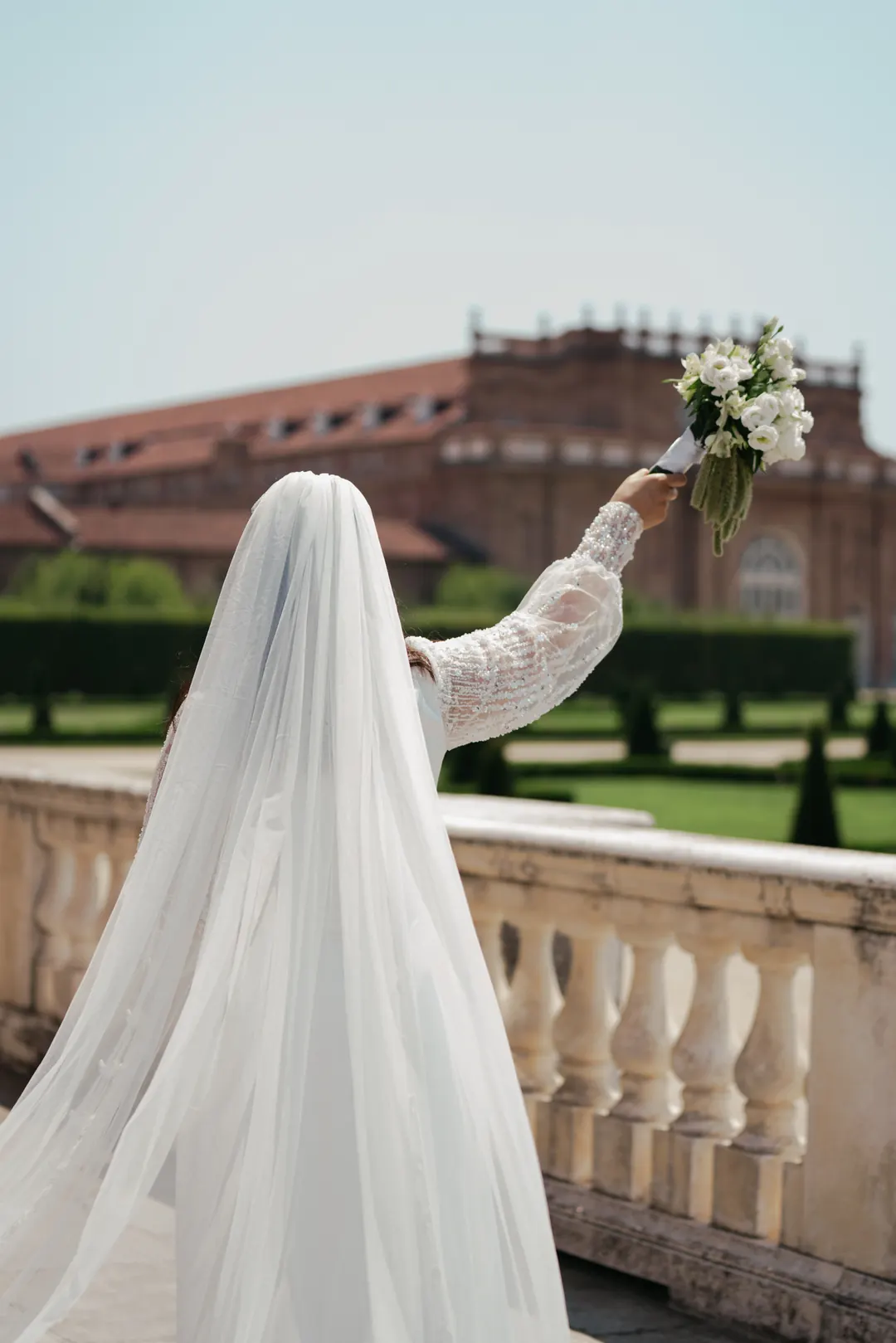
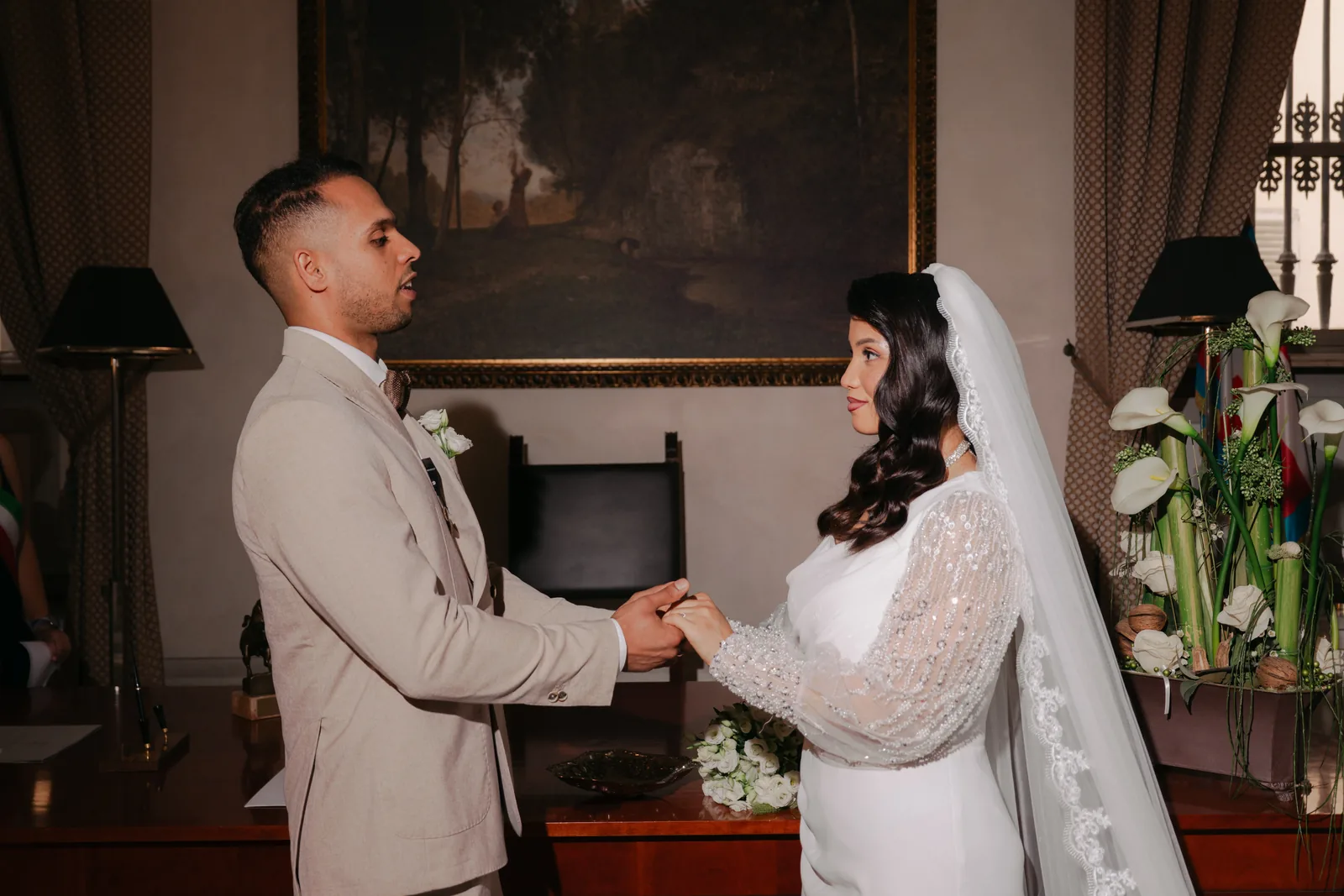
Near Turin I photographed Mohammed and Hejrat's civil ceremony and their portraits at the Reggia di Venaria, and in Susa, in the Alpine foothills, Musa and Solmaz's pre-wedding session. For a May to September Saturday I suggest booking 9 to 15 months ahead.
FAQ
Is a wedding in Italy legally valid in Ireland?
Yes, provided it is entered on the Italian civil register and all legal formalities were followed: that is the DFA's test. A civil ceremony at the comune is registered automatically. A Catholic wedding counts once the church record is transcribed into the civil register. A symbolic ceremony has no legal effect, so couples who choose one sign the papers in Ireland first.
What is the Certificate of Freedom to Marry?
It is the DFA's statement that you are free to marry, also called a Civil Letter of Freedom, Certificat de Coutume or Nulla Osta. You apply online, sign statutory declarations before a notary, Commissioner for Oaths or solicitor, and post them with original documents at least four months before the wedding. It costs €66 per Irish applicant.
Do we need an apostille or a translation?
Not for the certificate itself. The DFA explains that since February 2019 an apostille should no longer be required when an Irish Certificate of Freedom to Marry is presented to a public authority in another EU country, and for Italy it is issued in Italian. Ask your comune whether it wants anything else, such as a multilingual birth certificate.
Can we get married at the Irish College in Rome?
Yes. The Pontifical Irish College hosts Catholic weddings in its chapel or at the Baptistry of St John Lateran, on Mondays, Tuesdays, Thursdays and Fridays. Book directly as a couple, at least six months ahead, and avoid Lent, when Rome allows no weddings. You need church papers from your parish and the civil Certificate of Freedom to Marry.
Can same-sex Irish couples marry in Italy?
Italy offers same-sex couples a civil union, not marriage, and the DFA states that civil unions registered outside Ireland since 16 May 2016 are not recognised in Ireland. The practical answer is to marry legally in Ireland and hold a symbolic ceremony in Italy, which can take place wherever the venue allows.
Can our witnesses be family or friends from home?
Yes. Italian law asks for two adult witnesses at a civil ceremony and does not exclude relatives. They need a valid identity document, and if a witness does not understand Italian the interpreter must cover them too. Friends flying in from Ireland can serve; you do not need Italian residents. A church wedding has its own requirements, so ask the priest.
How early should we arrive in Italy?
There is no minimum stay, but you must hand in your documents and make the declaration of intention at the comune before the ceremony, usually a few working days ahead. A church wedding may add a meeting with the priest. Landing about a week before gives you room for appointments, a dress fitting and a calm rehearsal.
Ready to plan?
Your date and your church or comune are the two things I need to know first. Send me your date and venue and I will reply personally with my availability; my free planning guide covers the rest of the logistics for couples planning from abroad.
Sources
- Department of Foreign Affairs: marriage and civil partnership abroad, guidance for EU member states
- Pontifical Irish College, Rome: weddings
- Italian Civil Code, arts. 107 and 116, via Brocardi: art. 107, art. 116
- Law 121/1985, Italy and Holy See agreement: text
- Italian Bishops' Conference, 1990 decree on marriage: PDF
- Law 76/2016 on civil unions: normattiva.it
- EU, public documents: Your Europe
- Comune di Torino: civil ceremony, interpreter and fees, historic venues
- Embassy of Canada to Italy: declaration a few days after filing, banns waived for non-residents
- European Commission, DG Migration and Home Affairs: ETIAS, not yet in operation, EES and ETIAS, 28 April 2026; Italian Ministry of Foreign Affairs: visa portal
- Your Europe: euro payments within the EU cost the same as domestic ones
- Convention Bureau Italia and Italy for Weddings, Destination Wedding in Italy 2025 report, presented in Rome on 18 February 2026: summary on the Ministry of Tourism site
- European Central Bank: euro reference exchange rates (2 October 2026)
- Torino Airport: general timetable, summer 2026 and winter 2026 to 2027. Other routes change by season; confirm on each airport's site.
Keep reading
 Planning guideCivil wedding in Italy for foreigners: the documents, the steps and the rules by nationalityTwo foreigners can marry legally in Italy, and the marriage is normally recognised at home. You need a nulla osta from your own country, translated and stamped documents, two witnesses and a booking with the town hall. Here is how it works, step by step and nationality by nationality.
 Planning guideThe best time to get married in Italy: weather, crowds and light, month by monthFor most couples, the best time to get married in Italy is late May, June or September: warm days, long evenings and softer light than in the heat of July and August. Below is every month from April to October, with climate averages, events and sunset times, so you can choose with your eyes open.
 Planning guideHow much does a wedding photographer cost in Italy? Real prices for 2027Italian couples spend on average €1,850 on wedding photography, and in a 2025 survey most photographers in Italy charged €1,500 to €2,500 for a full day. Couples travelling in for a destination wedding usually see €3,000 to €8,000, more on Lake Como and in Puglia, and over €10,000 at luxury studios.